Jalandhara Bandha (Chin Lock)

The Ancient Yogic Practice for Thyroid, Heart & Mental Wellness
Yoga is far more than physical exercise—it is a powerful science of balancing the body’s internal energy. Among the many advanced yogic techniques described in ancient texts, Jalandhara Bandha, also known as the Chin Lock, holds a special place for its remarkable effects on the throat, mind, heart, and nervous system.
Practiced correctly, this traditional yogic lock helps regulate the flow of energy between the brain and the heart while promoting mental calmness, focus, and hormonal balance.
What is Jalandhara Bandha?
The word Jalandhara Bandha comes from Sanskrit:
- “Jala” refers to the network of energy channels (nadis) in the throat region.
- “Dhara” means “to hold,” “control,” or “lock.”
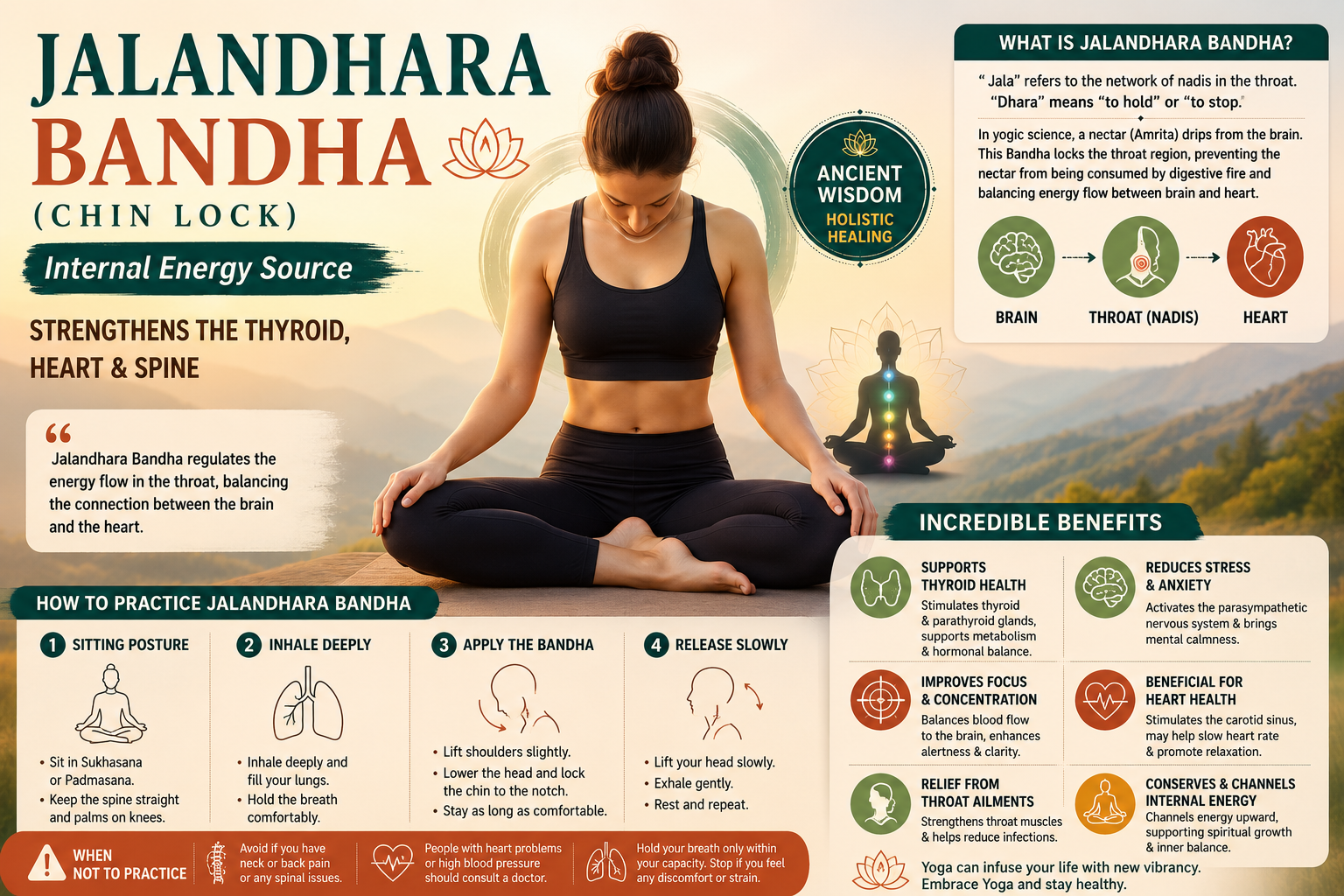
In yogic philosophy, it is believed that a subtle life force or Amrita (nectar of vitality) continuously flows downward from the higher energy centers of the brain. Jalandhara Bandha helps regulate this flow by gently locking the throat region and balancing internal energy movement throughout the body.
This practice is commonly included in Pranayama (breath control) and advanced meditation techniques.
How to Practice Jalandhara Bandha Correctly
To experience the full benefits of this yogic lock, proper posture and breathing are essential.
1. Sit in a Comfortable Position
Choose a quiet and well-ventilated space.
You may sit in:
- Sukhasana (Easy Pose)
- Padmasana (Lotus Pose)
Keep:
- Spine straight
- Neck aligned
- Hands resting on the knees
2. Take a Deep Breath
Slowly inhale deeply and fill the lungs completely.
Hold the breath comfortably without strain. This breath retention is called Antara Kumbhaka.
3. Apply the Chin Lock
Now gently:
- Lift the shoulders slightly
- Press the palms onto the knees
- Lower the head forward
- Tuck the chin firmly into the notch between the collarbones
Maintain the posture only as long as comfortable.
4. Release Slowly
When you feel the need to breathe:
- Slowly raise the head
- Relax the shoulders
- Exhale gently
- Return to the normal sitting position
Rest for a few moments before repeating.
Health Benefits of Jalandhara Bandha
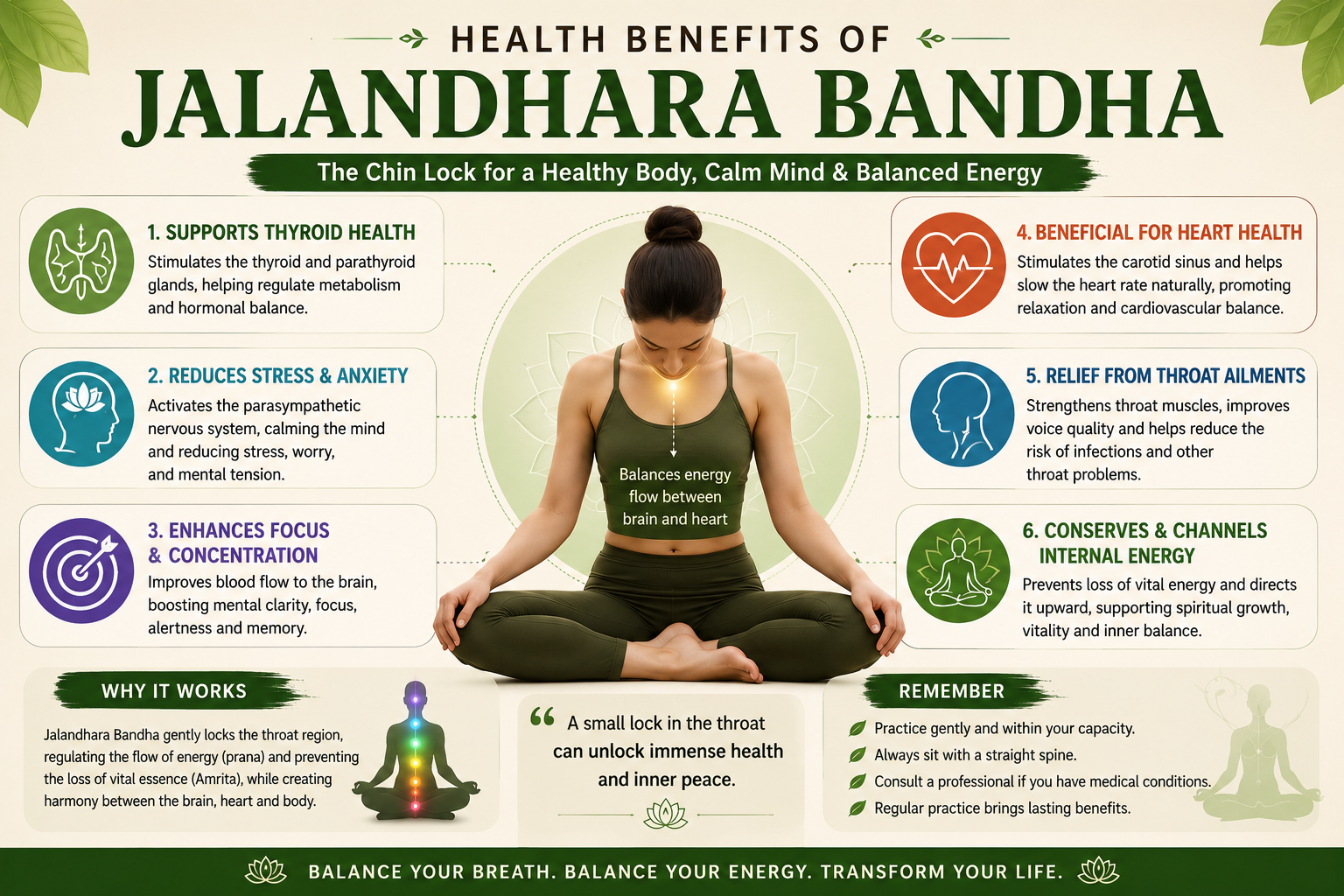
1. Supports Thyroid Health
The thyroid and parathyroid glands are located in the throat area. Gentle pressure created during the practice stimulates these glands and may help support:
- Healthy metabolism
- Hormonal balance
- Energy regulation
2. Reduces Stress & Anxiety
Jalandhara Bandha activates the parasympathetic nervous system, which promotes relaxation and mental calmness.
Regular practice may help:
- Reduce stress
- Calm emotional tension
- Improve mental clarity
- Relax the nervous system
3. Improves Concentration & Focus
By balancing blood circulation and energy flow toward the brain, this practice enhances:
- Mental alertness
- Focus
- Meditation quality
- Emotional stability
4. Beneficial for Heart Health
The gentle pressure around the throat stimulates the carotid sinus, which may help slightly slow the heart rate and promote relaxation.
However, people with heart conditions or high blood pressure should practice only under professional guidance.
5. Strengthens the Throat & Neck Region
Regular practice may help strengthen:
- Throat muscles
- Vocal control
- Neck stability
It may also support better respiratory awareness.
6. Helps Preserve Internal Energy
According to yogic science, Jalandhara Bandha helps direct energy upward toward higher centers of awareness, supporting:
- Meditation
- Inner calmness
- Spiritual growth
- Emotional balance
Who Should Avoid Jalandhara Bandha?
This practice should be avoided or performed cautiously in the following situations:
- Severe neck pain
- Cervical spondylosis
- Back injuries
- Heart disease
- High blood pressure
- Respiratory disorders
Never force breath retention. Stop immediately if you feel:
- Dizziness
- Pressure
- Discomfort
- Breathlessness
Always learn advanced yogic practices under a qualified yoga instructor.
Final Thoughts
Jalandhara Bandha is a powerful yogic technique that combines breath, posture, and internal awareness to improve both physical and mental well-being. From supporting thyroid health to calming the nervous system and enhancing focus, this ancient practice offers holistic benefits when practiced safely and consistently.
Yoga is not only about flexibility—it is about balance, awareness, and inner healing.