Digital Detox: A Step Towards a Healthier and Happier Life

In today’s fast-paced digital world, we are more connected than ever before. Yet despite constant connectivity, many people feel stressed, distracted, and emotionally exhausted. From the moment we wake up until we go to sleep, screens dominate our lives through smartphones, laptops, tablets, televisions, and social media platforms.
While technology offers convenience and communication, excessive screen exposure can negatively impact mental health, relationships, productivity, and overall well-being. This is where Digital Detox becomes an important step toward restoring balance in life.
What Is Digital Detox?
A digital detox is a conscious decision to take a break from digital devices such as smartphones, computers, televisions, and social media platforms for a specific period.
The purpose is simple:
- Reduce stress and mental overload
- Improve focus and productivity
- Strengthen real-life relationships
- Enhance sleep quality
- Reconnect with yourself and the world around you
Digital detox does not mean abandoning technology completely. Instead, it means using technology mindfully and preventing it from controlling your life.
How to Start a Digital Detox
The key to a successful digital detox is making small, sustainable changes rather than trying to disconnect completely overnight.
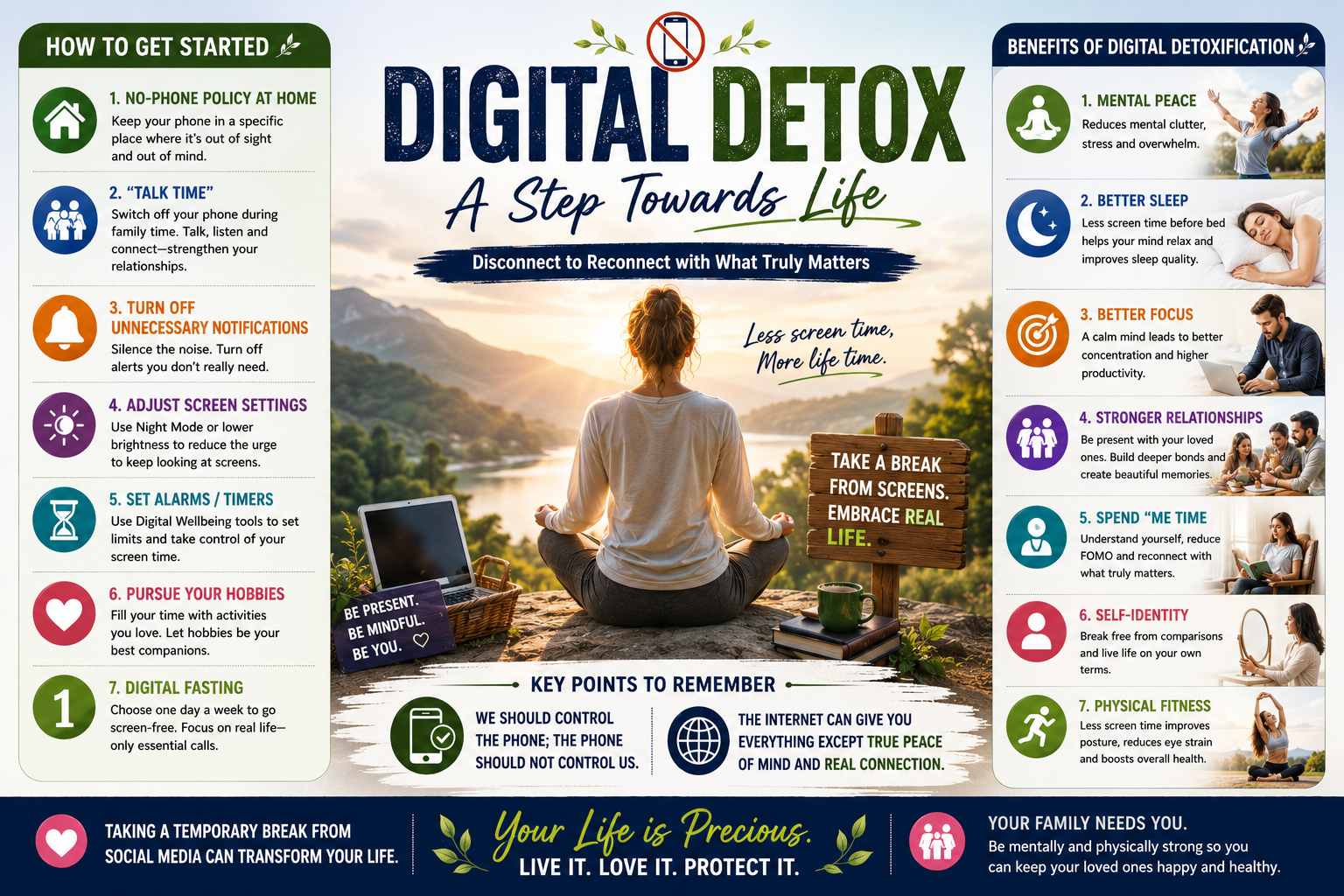
1. Create a No-Phone Zone at Home
Choose a designated place where you keep your phone when spending time at home. Keeping it out of sight helps reduce the urge to check notifications constantly.
2. Prioritize Family Conversations
During family meals or gatherings, switch your phone to silent mode and focus on meaningful conversations. Genuine interactions help strengthen emotional bonds and improve relationships.
3. Turn Off Unnecessary Notifications
Constant notifications create interruptions and increase mental stress. Disable alerts from apps that are not essential to reduce distractions.
4. Adjust Screen Settings
Bright screens stimulate dopamine release, encouraging continuous scrolling and screen use. Use features such as:
- Night Mode
- Dark Mode
- Reduced Brightness
These settings can help decrease screen dependency.
5. Use Digital Wellbeing Tools
Most smartphones now include built-in features that track screen time and allow users to:
- Set app usage limits
- Schedule downtime
- Receive screen-time reports
These tools can help build healthier digital habits.
6. Reconnect With Your Hobbies
Reading, gardening, painting, cooking, music, exercise, or any creative hobby can naturally reduce screen time while improving emotional well-being.
7. Practice Weekly Digital Fasting
Choose one day each week to minimize screen use. Restrict device usage to only essential calls or emergencies and spend the day engaging in offline activities.
Benefits of Digital Detox

1. Improved Mental Well-Being
Continuous exposure to social media, news, and notifications can overwhelm the brain. Digital detox helps reduce stress, anxiety, and mental fatigue.
2. Better Sleep Quality
Screen exposure before bedtime interferes with melatonin production, making it difficult to fall asleep. Limiting screen use before bed promotes deeper and more restful sleep.
3. Increased Focus and Productivity
Fewer digital distractions allow the brain to concentrate better, improving work performance, learning ability, and overall productivity.
4. Stronger Relationships
Putting your phone down allows you to be fully present with friends and family. Quality time strengthens emotional connections and improves communication.
5. More Personal Time
Digital detox creates opportunities for self-reflection, relaxation, and personal growth. It allows you to reconnect with your goals, interests, and values.
6. Reduced Fear of Missing Out (FOMO)
Social media often creates unrealistic comparisons and feelings of inadequacy. Taking breaks helps reduce anxiety and improves self-confidence.
7. Better Physical Health
Excessive screen use often leads to:
- Poor posture
- Neck and back pain
- Eye strain
- Sedentary lifestyle habits
Reducing screen time encourages movement and supports overall physical health.
Practical Tips for a Successful Digital Detox
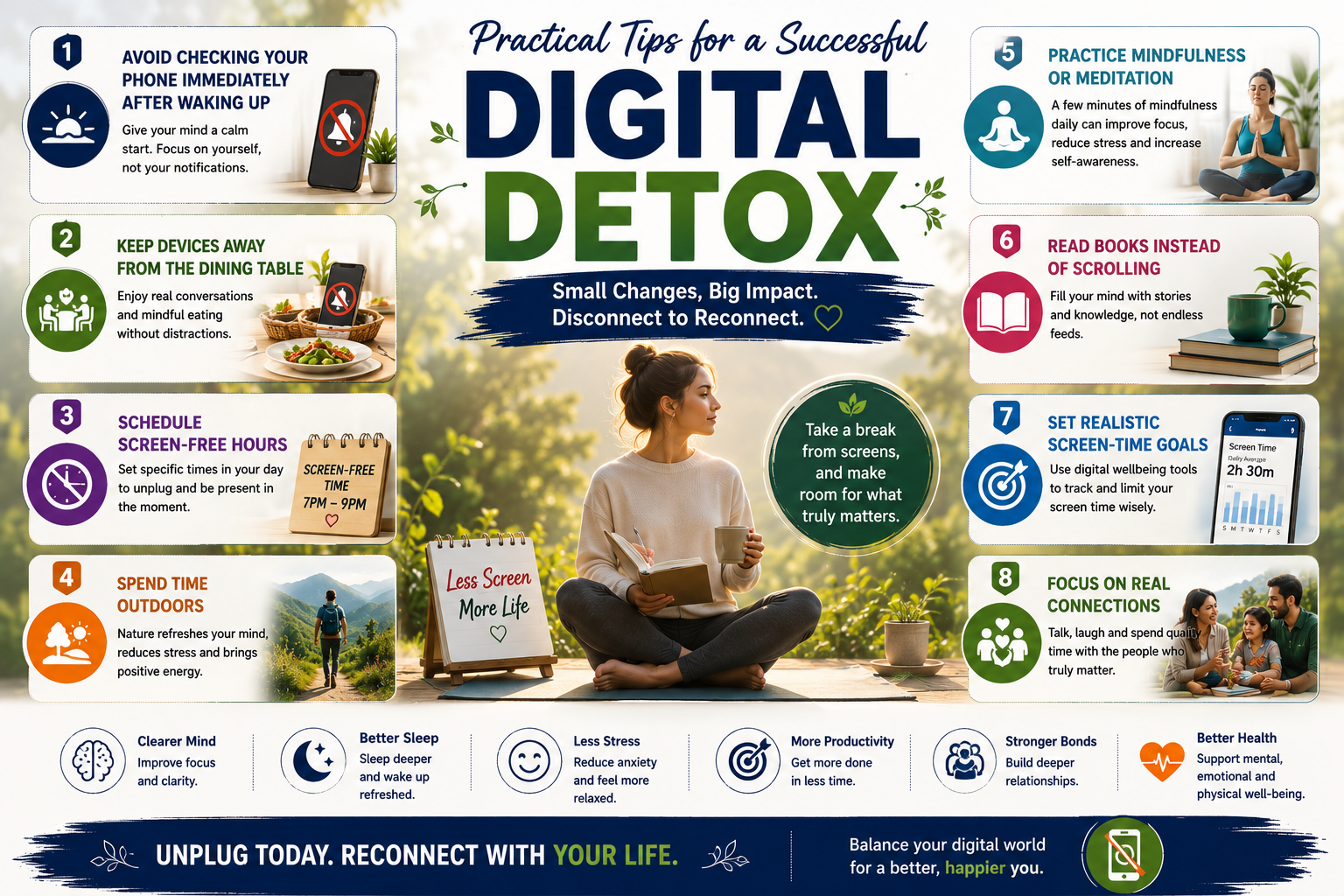
- Avoid checking your phone immediately after waking up.
- Keep devices away from the dining table.
- Schedule screen-free hours daily.
- Spend time outdoors whenever possible.
- Practice mindfulness or meditation.
- Read books instead of scrolling before bedtime.
- Set realistic screen-time goals.
Remember: Control Technology Before It Controls You
Technology is a powerful tool, but it should serve your life—not dominate it.
The internet can provide endless information and entertainment, but true happiness, peace of mind, and meaningful relationships cannot be found on a screen. They are built through real-life experiences, genuine human connections, and personal growth.
A temporary break from social media and digital devices can help you regain clarity, improve your mental health, and rediscover what truly matters.
Your life, health, and relationships are priceless. Use technology wisely and make time for the people and experiences that bring genuine happiness.