White Discharge in Women: Normal or a Sign of Infection?

Do you experience white vaginal discharge and feel unsure whether it is normal or something to worry about? You are not alone. Many women face this issue but hesitate to talk about it openly, which often delays proper care.
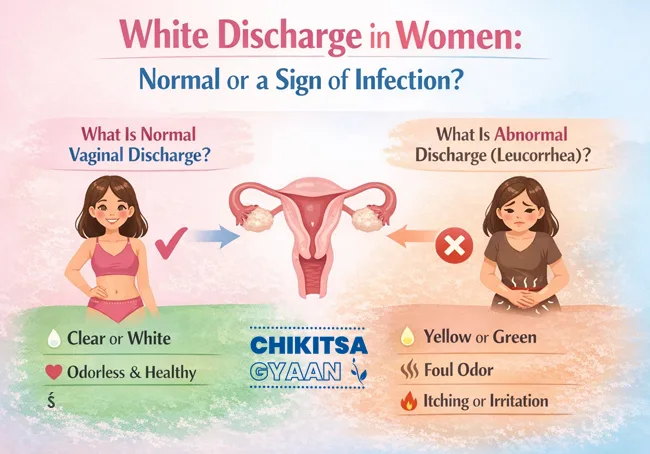
Understanding the difference between normal vaginal discharge and abnormal discharge (leucorrhea) is essential for maintaining women’s health.
What Is Normal Vaginal Discharge?
The cervix and vaginal walls naturally produce a fluid that:
-
Keeps the vagina clean and moist
-
Protects it from external infections
The vagina maintains a natural acidic pH (3.8–4.5), which prevents harmful bacteria and fungi from growing.
Normal Discharge Characteristics
-
Thin, watery, or slightly white
-
Odorless
-
Does not cause itching or burning
It may increase:
-
During ovulation
-
Before menstruation
-
During sexual arousal
-
In early pregnancy
👉 This type of discharge is completely normal and healthy.
What Is Abnormal Discharge (Leucorrhea)?
Discharge is considered abnormal when it:
-
Becomes very thick (curd-like)
-
Appears yellow, green, gray, or brown
-
Has a foul or fishy odor
-
Causes itching, burning, redness, or discomfort
This condition is commonly known as leucorrhea and usually indicates an infection or internal imbalance.
Common Causes of Leucorrhea
1. Medical Causes
-
Bacterial or fungal infections (often due to poor intimate hygiene)
-
Hormonal imbalance, especially excess estrogen
-
Calcium deficiency
-
Anemia (low hemoglobin)
-
Diabetes, which weakens immunity
-
Sexually transmitted infections (STIs) due to unprotected sex or multiple partners
2. Lifestyle-Related Causes
-
Chronic stress and overthinking
-
Unhealthy, spicy, or junk food (increases body heat)
-
Poor personal hygiene
-
Repeated miscarriages (can weaken the uterus)

Symptoms Associated with Leucorrhea
-
Persistent lower abdominal or back pain
-
Constant fatigue and heaviness
-
Irritability
-
Vaginal itching, redness, or rashes
-
Frequent urge to urinate
-
Strong or fishy odor from undergarments
What Does the Color of Discharge Indicate?
-
Clear / watery / light white: Normal and protective
-
Yellow or green: Bacterial or fungal infection
-
Brown: Normal after periods; otherwise may indicate uterine issues
-
Gray with fishy odor: Bacterial vaginosis
Prevention & Safe Home Care
Many women avoid discussing this issue due to embarrassment, which worsens the condition. Early care is the key.
Important Hygiene Tips
-
Avoid chemical-based vaginal washes
-
Do not perform internal douching (it kills healthy bacteria)
-
Keep the area clean and dry
-
Wear clean, cotton undergarments
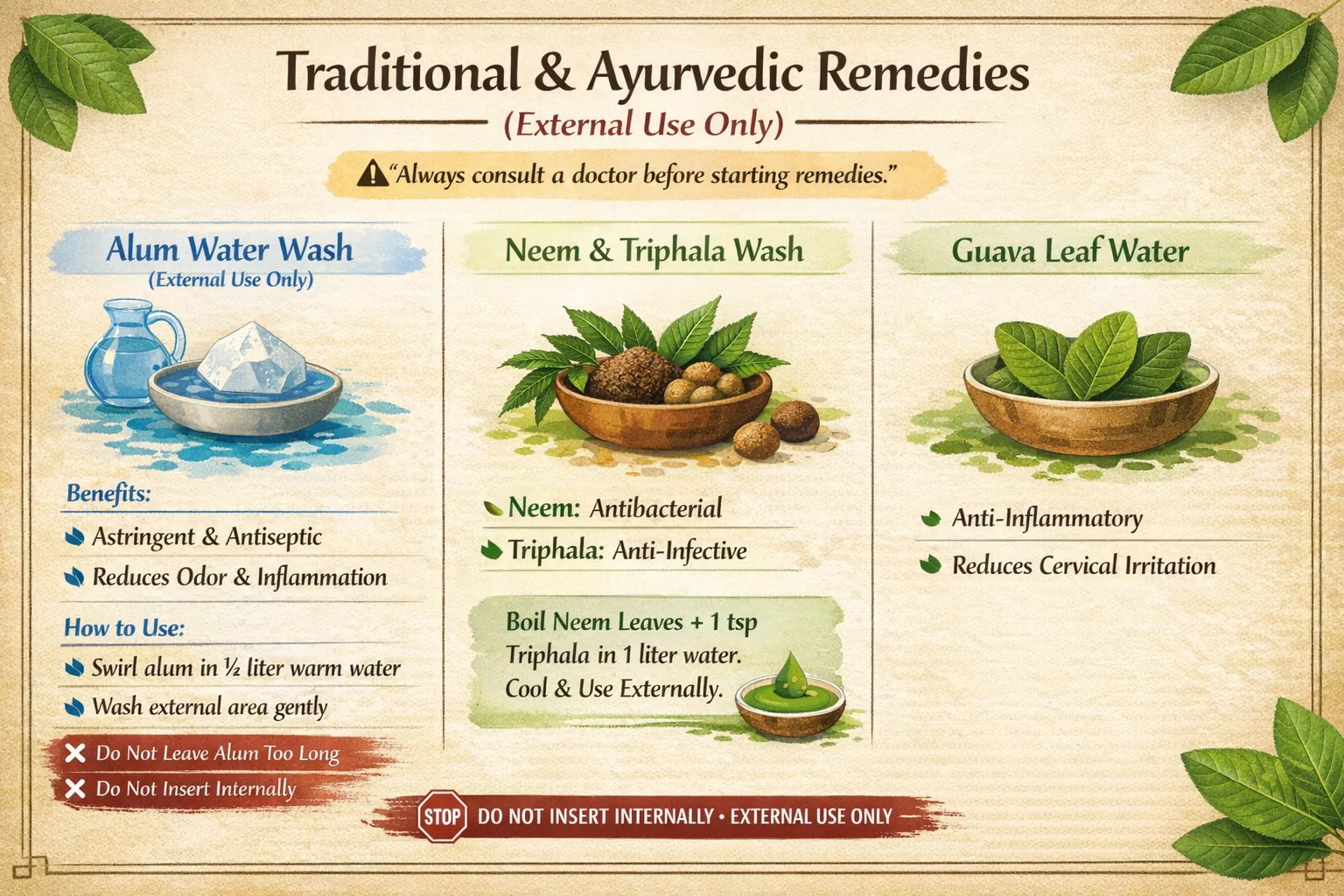
Traditional & Ayurvedic Remedies (External Use Only)
⚠️ Always consult a doctor before starting remedies.
1. Alum Water Wash (External Use Only)
Benefits:
-
Natural astringent (reduces excess discharge)
-
Antiseptic (kills bacteria)
-
Reduces odor and inflammation
How to use:
-
Take ½ liter lukewarm water
-
Swirl a small piece of alum (betel nut size) for 20–30 minutes, then remove
-
Wash the external area gently (top to bottom)
-
Dry thoroughly with a clean cloth
❌ Do not leave alum in water too long
❌ Do not insert internally
2. Neem & Triphala Wash
-
Neem: antibacterial
-
Triphala: anti-infective
Boil neem leaves + 1 tsp Triphala in 1 liter water, reduce to half, cool, and use externally.
3. Guava Leaf Water
-
Anti-inflammatory
-
Reduces cervical irritation
Ayurvedic Internal Support (Under Medical Guidance)
-
Lodhra – Reduces uterine inflammation (most important herb)
-
Ashoka Bark / Ashoka Arishta – Hormonal balance
-
Shatavari – Restores strength after prolonged discharge
-
Ashwagandha + milk – Improves immunity and vitality
-
Nagkesar – Helpful for burning and stickiness
-
Goolar (Cluster Fig) – Cooling, anti-infective
Can Lime Help in Leucorrhea? (With Caution)
Lime contains calcium, and calcium deficiency is one contributing factor to leucorrhea.
Correct Method
-
Mix a wheat-grain-sized amount of edible lime with:
-
Yogurt (morning, empty stomach) or
-
20 ml pomegranate juice
-
Precautions
-
❌ Avoid if you have kidney stones
-
❌ Never exceed the quantity
-
❌ Never apply lime to private parts
-
Always consult a doctor
A Step Towards Your Health
White discharge is not just weakness or tiredness—it can silently weaken your body from within. Awareness is still low, especially in rural areas, but help is available.
Women should:
-
Speak openly about their symptoms
-
Consult doctors or local health workers (ASHA, ANM)
-
Visit nearby health centers without hesitation
👉 Your health is your responsibility. Taking the first step can protect your future.