What Is a Lymph Node and Why Does It Swell?

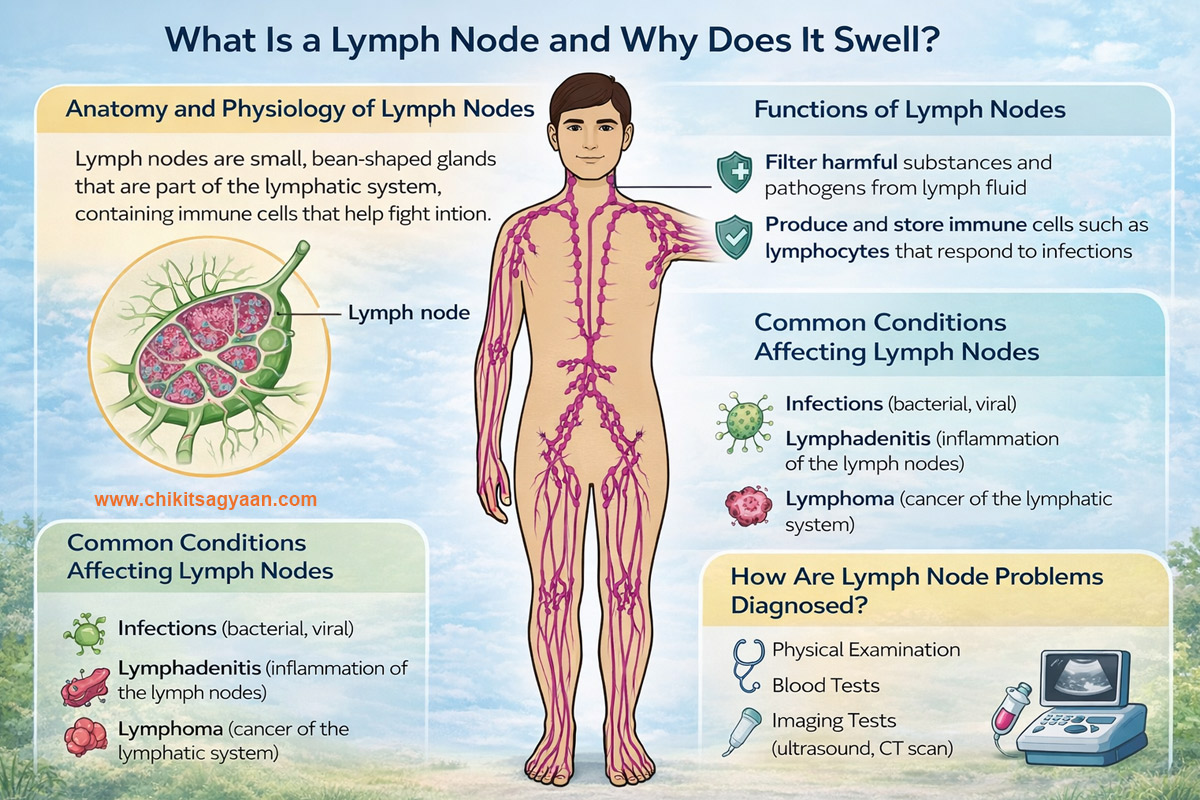
Lymph nodes are small, bean-shaped glands that play a crucial role in protecting our body from infections and diseases. They are an essential part of the lymphatic system, which works closely with the immune system.
You can commonly feel lymph nodes in areas such as:
-
Neck
-
Armpits (axilla)
-
Groin
-
Chest
-
Abdomen
When lymph nodes swell, it is often a sign that the body is fighting something—most commonly an infection, but sometimes more serious conditions.
Anatomy and Physiology of Lymph Nodes
Size and Shape
-
Normal size: 2–10 mm
-
Shape: Round or oval
-
They may enlarge significantly during infection, inflammation, or cancer
Internal Structure of a Lymph Node
1. Capsule
-
The outer fibrous covering of the lymph node
-
Inside, connective tissue bands called trabeculae divide the node into compartments
2. Cortex (Outer Region)
Located just beneath the capsule and divided into two parts:
a) Outer Cortex
-
Rich in B lymphocytes (B cells)
-
B cells are arranged in clusters called follicles
-
When exposed to infection, these follicles form germinal centers, which act as antibody-producing zones
b) Paracortex (Inner Cortex)
-
Contains T lymphocytes (T cells)
-
T cells mature in the thymus and are essential for cell-mediated immunity
3. Medulla (Inner Core)
-
Medullary cords: Contain plasma cells and lymphocytes
-
Medullary sinuses: Channels through which lymph fluid flows
4. Hilum
-
Entry and exit point for blood vessels and lymphatic vessels
-
Afferent lymphatic vessels bring lymph into the node
-
Efferent lymphatic vessels carry filtered lymph out of the node
Functions of Lymph Nodes
Lymph nodes act as biological filters and immune response centers.
1. Filtration of Lymph Fluid
-
Remove bacteria, viruses, toxins, and dead cells
-
Macrophages and dendritic cells engulf and destroy harmful particles
2. Activation of Immune Response
-
When pathogens enter, B and T cells become activated
-
This triggers a targeted immune response
3. Antibody Production
-
B cells transform into plasma cells
-
Plasma cells release antibodies that neutralize infections
4. Maintaining Fluid Balance
-
The lymphatic system returns excess tissue fluid to the bloodstream
-
Helps prevent fluid accumulation and swelling
Common Conditions Affecting Lymph Nodes
1. Lymphadenopathy
-
General term for enlarged lymph nodes
-
Seen in viral infections, autoimmune diseases, and cancers
2. Lymphadenitis
-
Painful, warm, tender nodes
-
Usually caused by bacterial infections such as Streptococcus or Staphylococcus
3. Tubercular Lymphadenitis
-
Gradual enlargement of lymph nodes due to tuberculosis
-
Nodes may rupture and discharge pus (also called scrofula)
4. Metastatic Lymph Nodes
-
Cancer spreads from organs (breast, lung, etc.) to lymph nodes
-
Nodes are hard, fixed, and painless
5. Lymphoma
-
Cancer of lymphatic cells
-
Nodes become rubbery, painless, and persistently enlarged
6. Lymphedema
-
Swelling due to damage or removal of lymph nodes
-
Common after cancer surgery or radiation
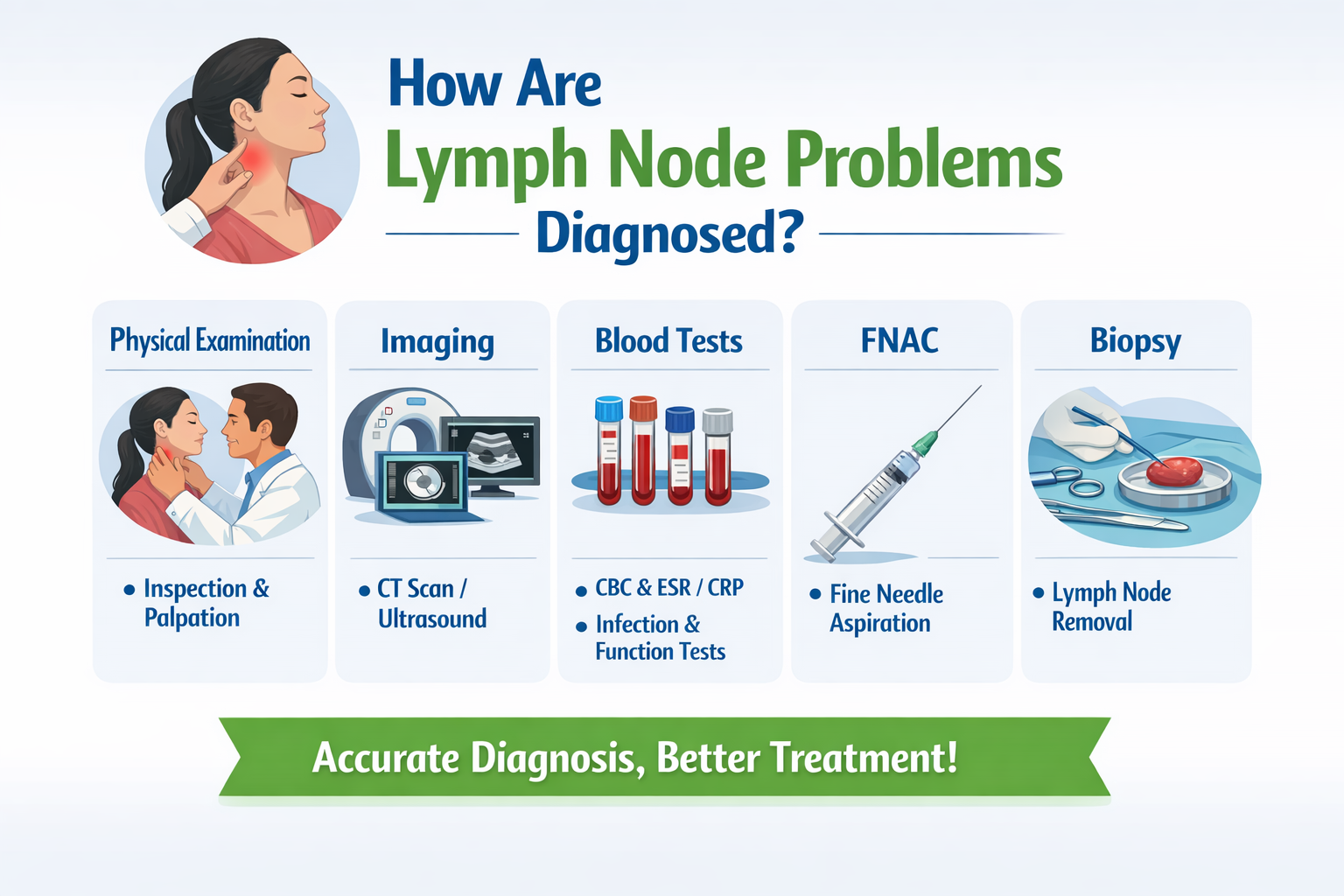
How Are Lymph Node Problems Diagnosed?
1. Physical Examination
-
Inspection: Redness, swelling, stretched skin
-
Palpation: Assess size, tenderness, mobility, consistency, and location
2. Imaging
-
CT scan or ultrasound to evaluate deeper nodes
3. Blood Tests
-
CBC
-
ESR / CRP
-
Tests for infections (HIV, EBV, Hepatitis)
-
Liver and kidney function tests
4. FNAC (Fine Needle Aspiration Cytology)
-
A thin needle extracts cells or fluid
-
Provides 70–80% diagnostic accuracy
5. Biopsy
-
Entire lymph node is removed for detailed examination
-
Gold standard for diagnosing lymphoma
When Should You See a Doctor?
-
Lymph node swelling lasting more than 2–3 weeks
-
Hard, fixed, or painless nodes
-
Associated weight loss, fever, or night sweats
-
Rapidly increasing size