Painful Periods: Could It Be Endometriosis? Know the Warning Signs

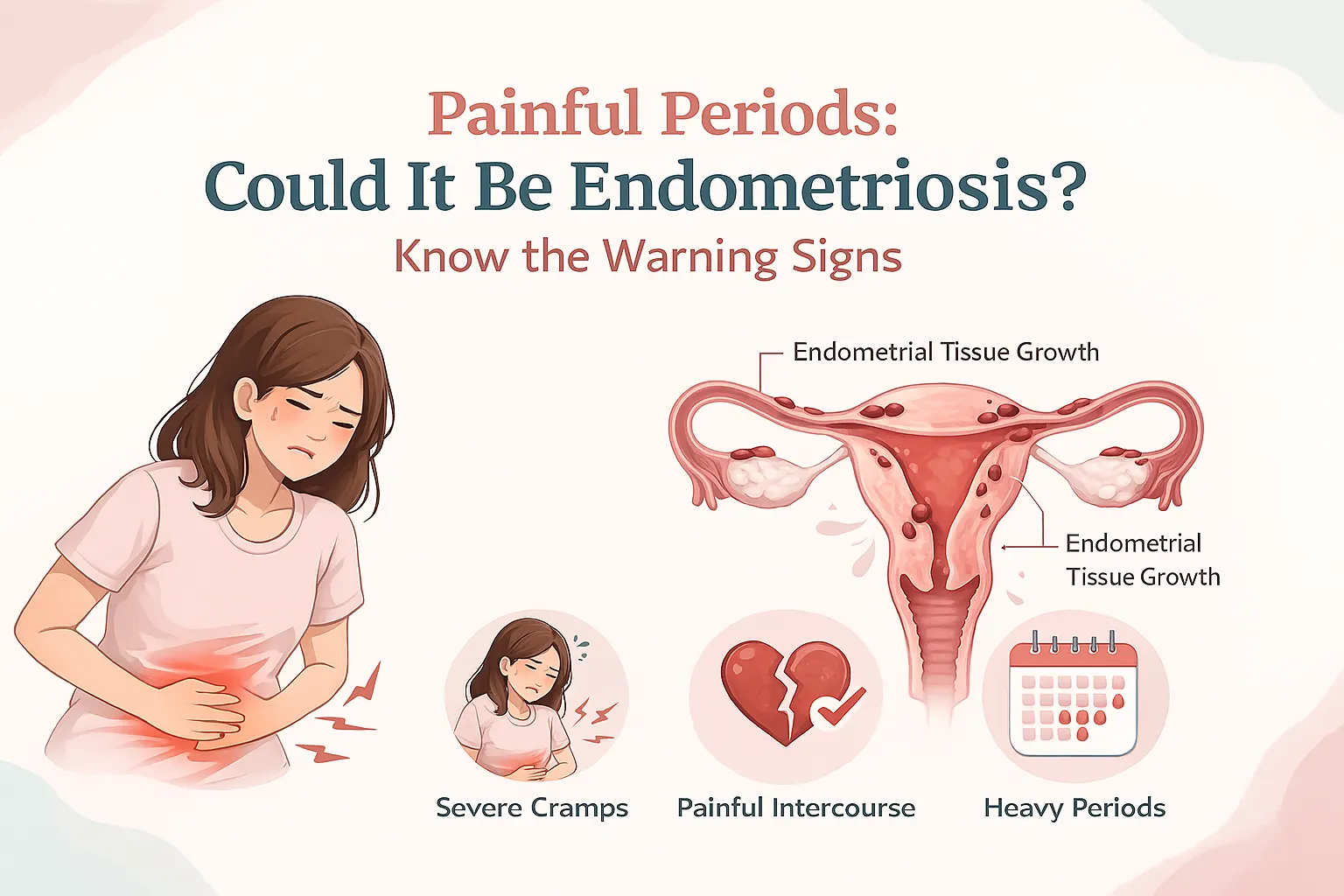
Do you experience severe pain during your periods—pain that disrupts your daily life or even sends you to the hospital? It may not be “normal period pain.” In some cases, it could be endometriosis, a condition that often goes undiagnosed for years.
Before understanding endometriosis, it’s important to know what a normal menstrual cycle looks like.
What Is a Normal Menstrual Cycle?
A healthy menstrual cycle is assessed using three key factors:
1. Cycle Duration
-
The time from the first day of one period to the first day of the next
-
Average cycle length: 28 ± 7 days
Irregular periods:
-
Cycle shorter than 21 days
-
Cycle longer than 35 days
2. Bleeding Duration
-
Normal bleeding lasts 2–7 days
-
Most women bleed for 2–5 days
3. Bleeding Volume
-
Normal blood loss: 5–80 ml per cycle
-
Normal flow: Changing a pad/tampon every 3–4 hours
-
Heavy bleeding (menorrhagia):
-
Changing pads every 1–2 hours
-
Passing large clots (about the size of a coin)
-
👉 If your cycle does not meet these parameters, it may indicate an underlying issue—including endometriosis.
What Is Endometriosis?
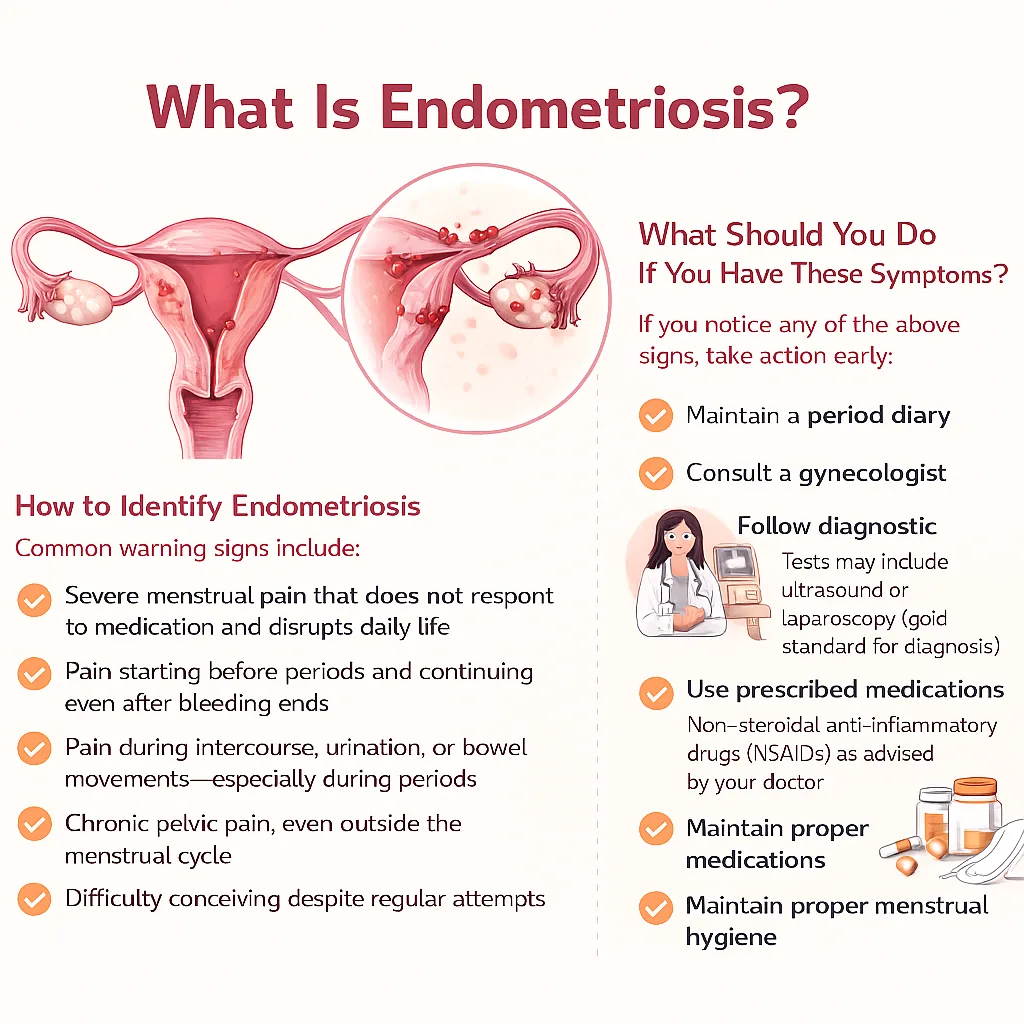
Endometriosis is a condition where tissue similar to the inner lining of the uterus (endometrium) grows outside the uterus, commonly on:
-
Ovaries
-
Fallopian tubes
-
Pelvic lining
This misplaced tissue behaves like normal endometrial tissue—it thickens, breaks down, and bleeds with each menstrual cycle. However, because the blood has no way to exit the body, it becomes trapped, leading to:
-
Chronic pain
-
Inflammation and swelling
-
Scar tissue and adhesions
Over time, this can interfere with reproductive organs and may cause infertility.
How to Identify Endometriosis
Common warning signs include:
-
Severe menstrual pain that does not respond to medication and disrupts daily life
-
Pain starting before periods and continuing even after bleeding ends
-
Pain during intercourse, urination, or bowel movements—especially during periods
-
Chronic pelvic pain, even outside the menstrual cycle
-
Difficulty conceiving despite regular attempts
What Should You Do If You Have These Symptoms?
If you notice any of the above signs, take action early:
-
Maintain a period diary
-
Track cycle dates and pain intensity (rate pain on a scale of 1–10)
-
-
Consult a gynecologist
-
Share your pain patterns clearly
-
-
Follow diagnostic advice
-
Tests may include ultrasound or laparoscopy (gold standard for diagnosis)
-
-
Use prescribed medications
-
Non-steroidal anti-inflammatory drugs (NSAIDs) as advised by your doctor
-
-
Maintain proper menstrual hygiene
Key Takeaway
Severe period pain is not normal and should never be ignored.
Early diagnosis and proper management of endometriosis can:
-
Reduce pain
-
Improve quality of life
-
Protect fertility
If your periods are affecting your physical or emotional well-being, seek medical help without delay.