Iron Deficiency: What It Is and Why Iron Is Crucial During Pregnancy

What Is Iron Deficiency?
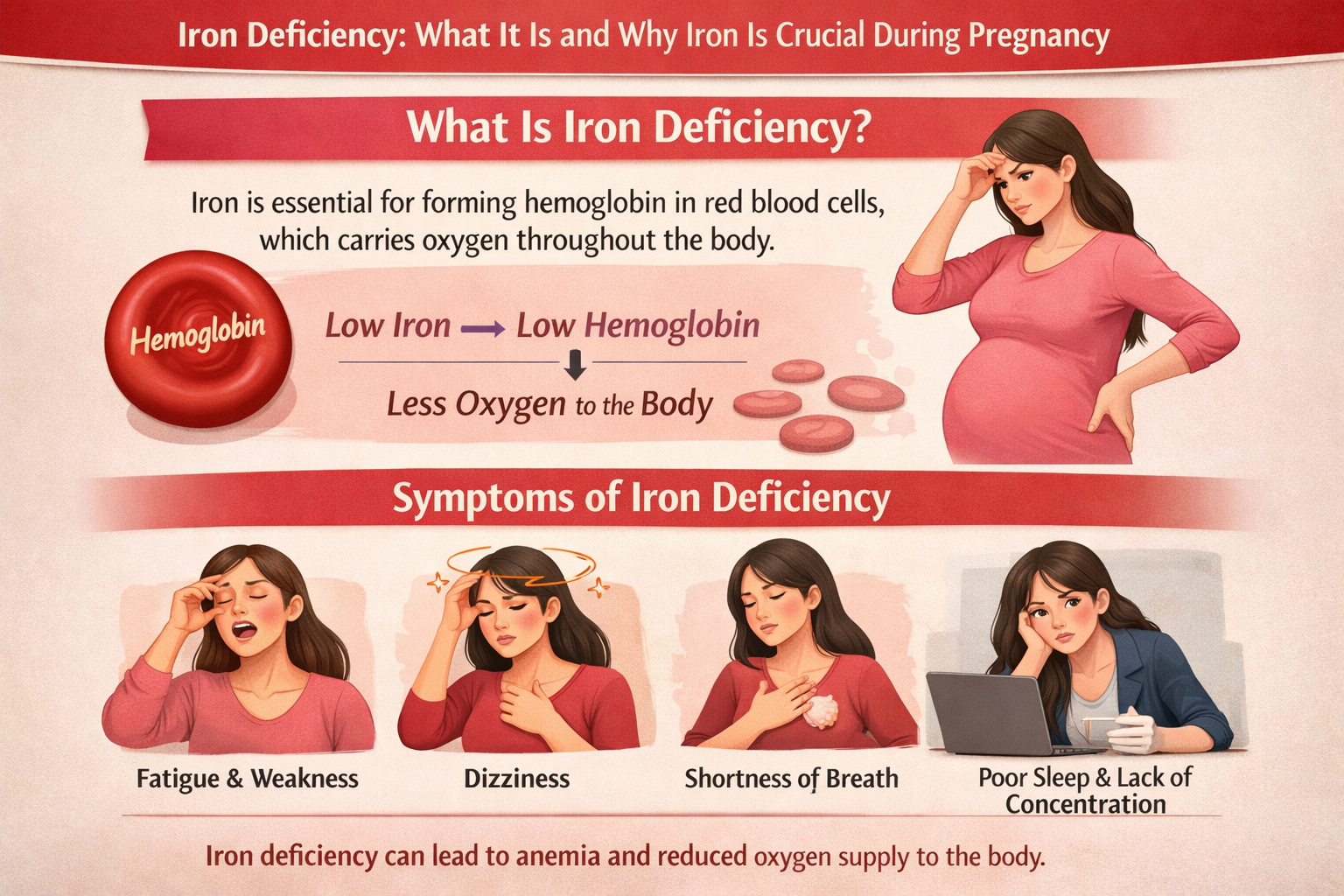
Iron is an essential mineral that plays a vital role in keeping our body healthy. Its primary function is to help form hemoglobin, a protein in red blood cells that carries oxygen from the lungs to all parts of the body.
When the body does not have enough iron, hemoglobin levels fall, leading to iron deficiency anemia. This reduces the oxygen supply to tissues and organs, causing symptoms such as:
-
Fatigue and weakness
-
Dizziness
-
Shortness of breath
-
Poor sleep and lack of concentration
Why Is Iron So Important During Pregnancy?
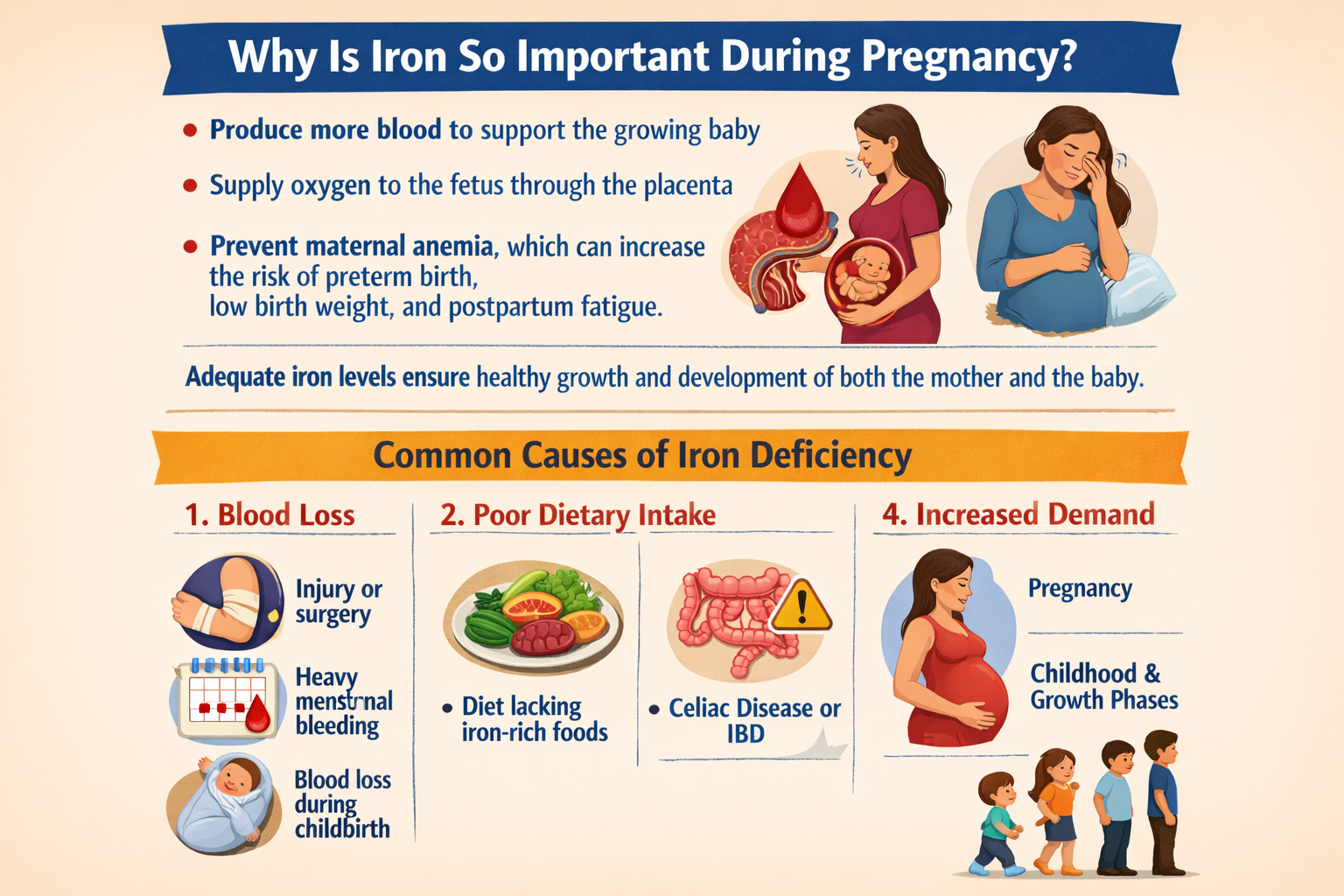
During pregnancy, a woman’s body needs extra iron to:
-
Produce more blood to support the growing baby
-
Supply oxygen to the fetus through the placenta
-
Prevent maternal anemia, which can increase the risk of preterm birth, low birth weight, and postpartum fatigue
Adequate iron levels ensure healthy growth and development of both the mother and the baby.
Common Causes of Iron Deficiency
1. Blood Loss
-
Injury or surgery
-
In women: heavy menstrual bleeding
-
Blood loss during childbirth
2. Poor Dietary Intake
-
Diet lacking iron-rich foods
3. Poor Iron Absorption
-
Conditions such as celiac disease or inflammatory bowel disease (IBD) can reduce iron absorption
4. Increased Demand
-
Pregnancy
-
Childhood and adolescent growth phases
Signs and Symptoms of Iron Deficiency
-
Constant tiredness
-
Pale face and lips
-
Brittle or spoon-shaped nails
-
Excessive sleepiness
-
Shortness of breath
-
Dizziness or headaches
Iron-Rich Foods to Include in Your Diet
Vegetarian Sources
-
Spinach
-
Fenugreek leaves
-
Moong dal, masoor dal
-
Beetroot
-
Jaggery and dates
-
Sesame seeds and pumpkin seeds
Non-Vegetarian Sources
-
Red meat
-
Liver
-
Egg yolk
-
Fish and chicken
Vitamin C–Rich Foods (Improve Iron Absorption)
-
Amla
-
Oranges
-
Lemon
-
Tomatoes
Tip: Pair iron-rich foods with vitamin C for better absorption.
Iron Supplements During Pregnancy
Doctors usually prescribe iron and folic acid supplements starting from the second trimester (around 4 months), unless there is a specific medical reason to start earlier.
⚠️ Do not self-medicate. Always take iron supplements under medical supervision, as excess iron can cause digestive discomfort and other complications.
Takeaway
Iron deficiency is common but preventable. A balanced diet, timely supplementation, and regular check-ups can help maintain healthy iron levels—especially during pregnancy, when iron plays a critical role in the well-being of both mother and baby.