
Conversion Disorder (FND): Truth or Falsehood?


Functional Neurological Disorder (FND)—previously called Conversion Disorder—is a real medical condition. It is not imaginary, not intentional, and not attention-seeking. In FND, the brain’s structure (hardware) is normal, but the way it sends and receives signals (software) becomes disrupted, leading to genuine neurological symptoms.
Simply put, the brain miscommunicates with the body, producing symptoms that look like neurological disease—without visible damage on scans.
What Is FND?
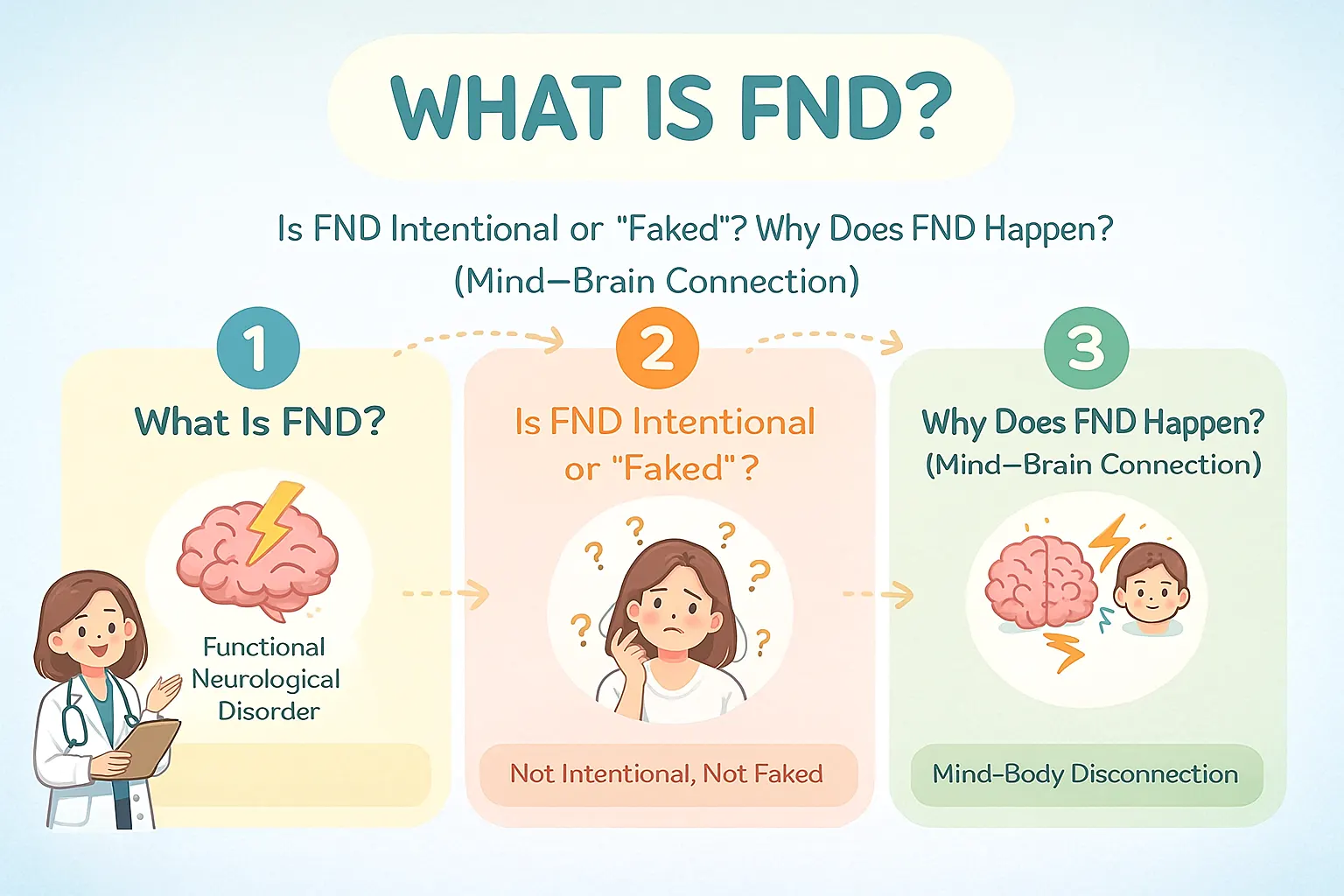
FND occurs when emotional stress, trauma, or internal conflict is expressed through physical neurological symptoms. Many people notice that during intense anxiety or unresolved conflict, the body reacts—sometimes far beyond headaches or stomach upset—into symptoms that resemble paralysis, seizures, or sensory loss.
Today, the preferred and less-stigmatizing name is Functional Neurological Disorder (FND).
Is FND Intentional or “Faked”?
Absolutely not.
A common myth is that patients are pretending or exaggerating symptoms. This is false. FND symptoms are real, involuntary, and distressing. Patients cannot simply “switch them off.”
Why Does FND Happen? (Mind–Brain Connection)
There is no single cause. FND results from a combination of psychological, biological, physical, and social factors.
1) Psychological Stress & Trauma
This is often the strongest contributor:
-
Major life stressors (divorce, bereavement, job loss)
-
Childhood trauma (serious illness, neglect, physical or sexual abuse)
-
Suppressed emotions (wanting to express feelings but feeling unable)
Research shows abnormal connectivity between the amygdala (emotion processing) and the motor cortex (movement control). Under extreme stress, the brain may disrupt normal signaling as a protective response.
2) Who Is More Susceptible?
-
People with anxiety or depression
-
Those with chronic or serious medical illness
-
Co-existing conditions like fibromyalgia, chronic fatigue syndrome, or migraines
Symptoms of FND (The “Great Mimicker”)
FND can closely mimic neurological diseases, often with sudden onset and fluctuating severity.
1) Motor Symptoms
-
Sudden weakness or paralysis (one limb or one side)
-
Tremors, spasms, muscle twitching
-
Abnormal gait, stumbling, balance problems, falls
2) Sensory Symptoms
-
Loss of sensation (touch, pain, temperature)
-
Vision problems (partial/complete blindness, tunnel vision, double vision)
-
Hearing difficulty without ear disease
3) Seizure-like Episodes
-
Psychogenic Non-Epileptic Seizures (PNES)
-
Look like epilepsy but EEG is normal
-
Not caused by abnormal electrical activity
Diagnosis: How Is FND Identified?
Diagnosis focuses on positive clinical signs and ruling out structural disease.
-
MRI / CT scans
-
Blood tests
-
Hoover’s Sign (e.g., the “weak” leg shows strength when the other leg is used)
These findings support a functional, not structural, diagnosis.
Effective Treatment for FND
FND is treatable, especially with a multidisciplinary approach.
1) Psychotherapy
-
Cognitive Behavioral Therapy (CBT) – most effective; helps manage stress, reframe thoughts, and reduce symptoms
-
Psychodynamic Therapy – addresses unresolved trauma and emotional conflicts
2) Functional Physical Therapy
-
Tailored specifically for FND
-
Helps “reset” movement patterns and rebuild confidence
3) Occupational Therapy
-
Supports return to daily activities affected by weakness or symptoms
4) Medications
-
Antidepressants or anti-anxiety medicines may help associated symptoms
-
They support recovery but do not cure FND alone

With Support, Recovery Is Possible
Being told “nothing is structurally wrong” can be confusing and frightening. But FND is not incurable. It affects the whole person—mind and body together.
Empathy, education, and consistent care make a real difference. Patients need understanding, reassurance, and professional support, not blame or pressure.
Common Myths About FND
-
❌ Evil spirits or possession – false and harmful belief
-
❌ The patient is pretending – completely incorrect
-
❌ “Hysteria” – an outdated, stigmatizing term that has rightly been abandoned
Education and awareness about FND are essential to reduce stigma and improve outcomes.
Key Takeaway
FND is a real, brain-based disorder where function—not structure—is disrupted. With the right diagnosis, compassionate explanation, and multidisciplinary treatment, many people improve significantly.
If you or someone you know experiences such symptoms, consult a qualified doctor or neurologist.