Improving Gut Health to Reduce Food Sensitivity and Picky Eating in Autism

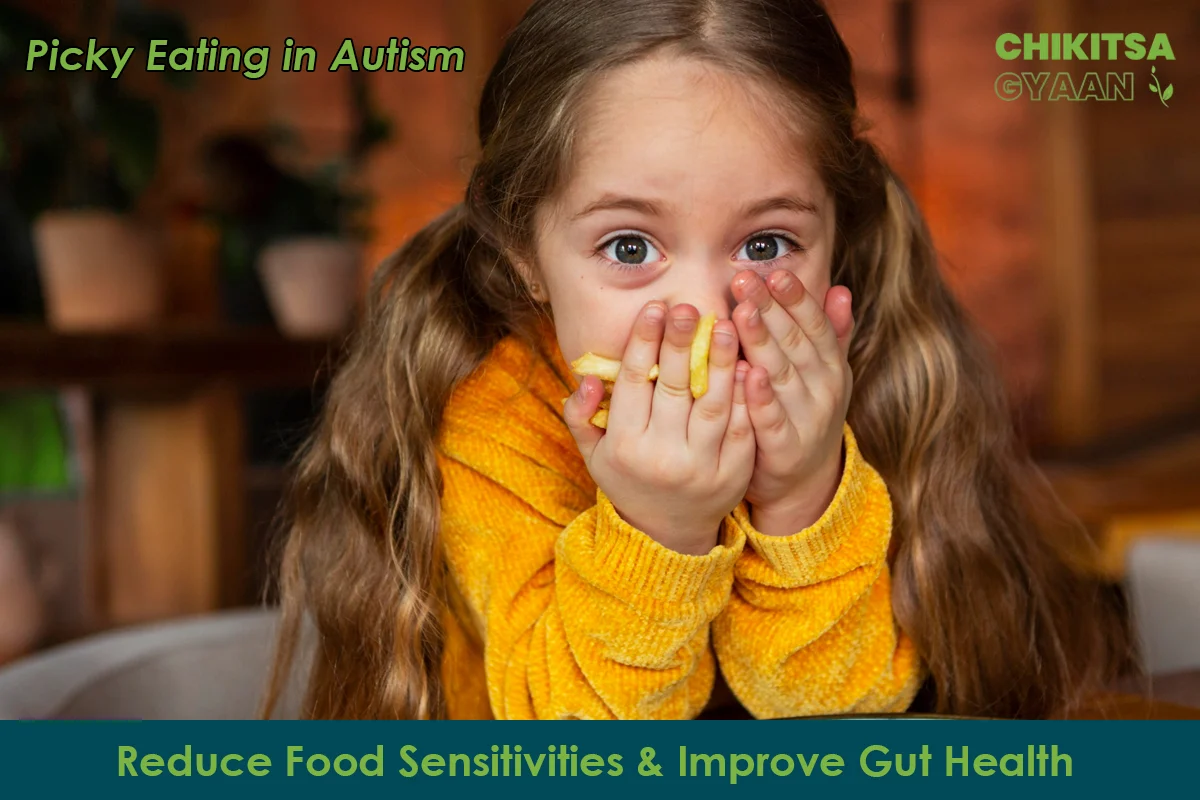
When a child’s gut health is strong, digestive discomfort decreases, mood swings become less frequent, and irritability reduces. Better gut health also helps control self-stimulatory behaviors (like sudden laughing, crying, shouting), supporting overall emotional and developmental growth.
Note: Always consult your pediatrician or a registered dietitian before giving supplements to your child.
Gut Health Strategies for Children with Autism
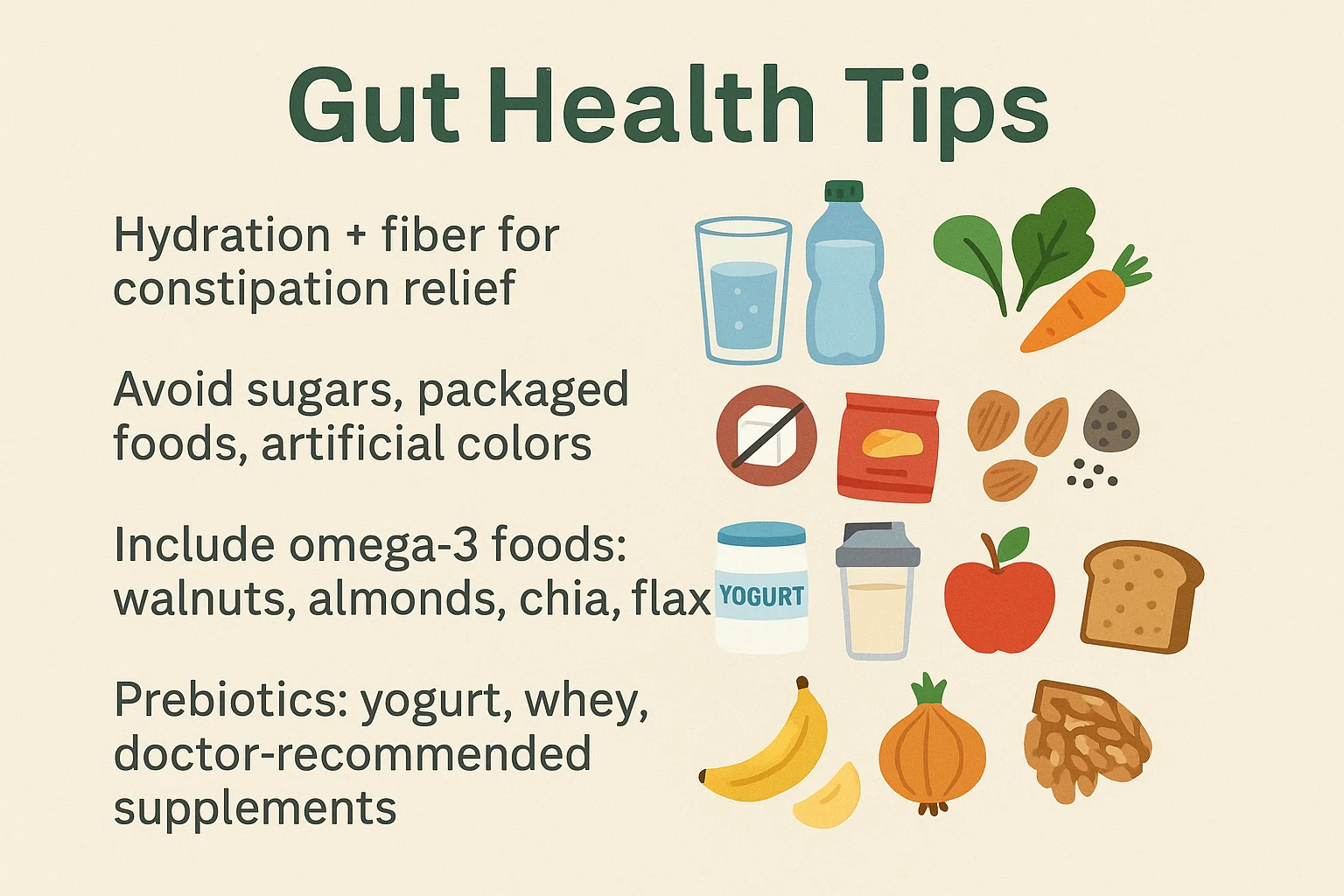
1. Hydration & Fiber
Proper hydration and fiber intake:
-
Prevents constipation
-
Reduces stomach pain
-
Helps stabilize mood and behavior
Encourage water-rich foods, fruits, and gentle fibers.
2. Avoid Trigger Foods
Limit foods that irritate the gut, such as:
-
Sugary snacks
-
Packaged and processed foods
-
Artificial colors & preservatives
-
Excess gluten or casein (GF/CF diet may benefit some children)
3. Omega-3 Fatty Acids
Foods like almonds, walnuts, flax seeds, and chia seeds provide anti-inflammatory omega-3s that support:
-
Better brain function
-
Improved focus
-
Reduced irritability
Managing Picky Eating in Autism: Gentle, Effective Strategies
1. Create a Calm & Stress-Free Eating Environment
Avoid Pressure
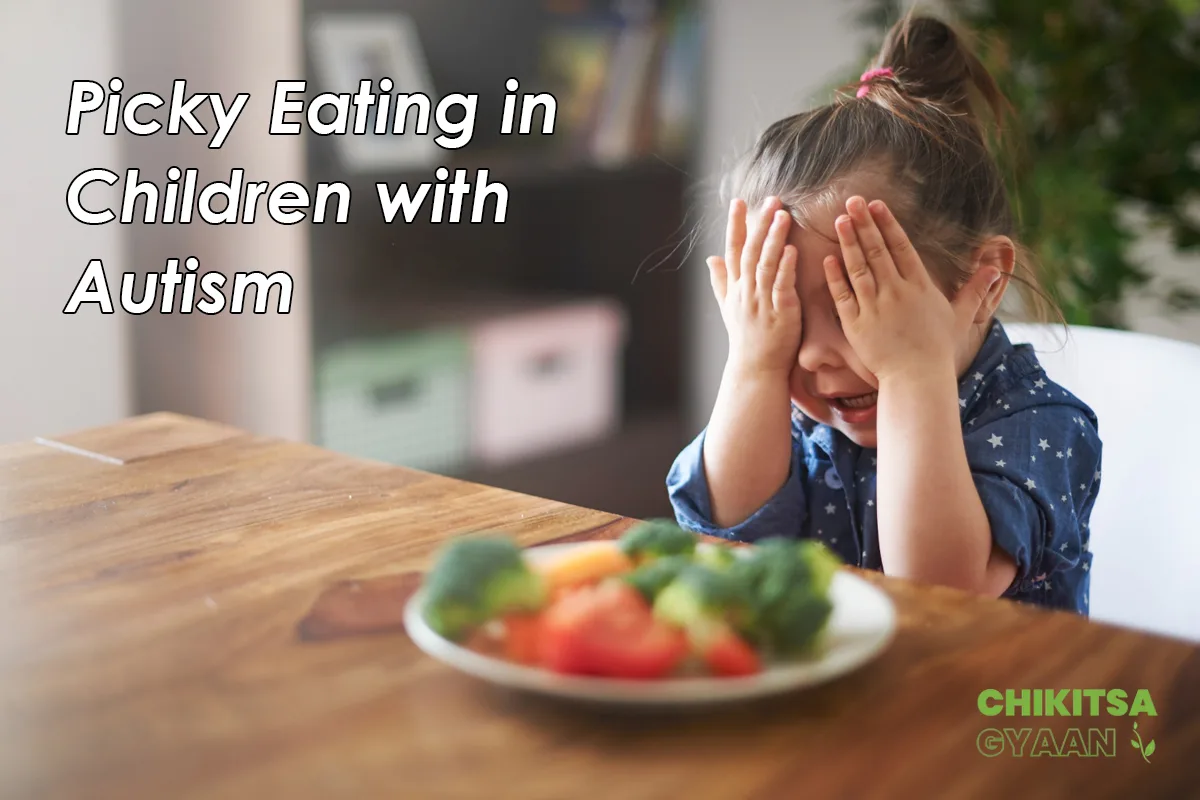
Autistic children often experience sensory conflicts. Statements like “Eat fast” or “Finish your food” create anxiety and resistance.
Instead, offer reassurance and gentle encouragement.
Maintain a Routine
-
Serve meals at the same time daily
-
Consistent timing builds comfort, security, and predictability
-
Ensure mealtimes are calm and positive
Remove Distractions
Turn off:
-
TV
-
Mobile phones
-
Loud music
-
Bright or flickering lights
A quiet, focused environment reduces sensory overload.
2. Use Small, Meaningful Steps
Start With Exposure
Place a small amount of new food on the child’s plate—no pressure to eat.
Let them:
-
Look at it
-
Smell it
-
Touch it
Encourage One Bite
The next step is to encourage just one bite.
If accepted, offer it again after a few days to build familiarity.
Make Food Fun
Creative plating can increase interest:
-
Animal faces
-
Shapes using vegetables
-
Colorful combinations
Match the Preferred Texture
Offer new foods in textures the child enjoys:
-
Soft
-
Crunchy
-
Smooth
Involve the Child
Let them help with:
-
Washing vegetables
-
Stirring
-
Picking colors or shapes
Participation increases curiosity and acceptance.
3. Limit Food Choices (But Don’t Restrict Variety)
-
Always include at least one familiar or favorite food on the plate.
-
Use structured choices:
“Do you want cucumber or carrot?”
Providing limited options helps the child feel in control without getting overwhelmed.
⚠️ When to Seek Professional Support
If picky eating becomes severe or negatively impacts the child’s:
-
Weight
-
Growth
-
Behavior
-
Nutrition
-
Gut health
…it’s essential to consult a certified Occupational Therapist (OT) or feeding specialist. They can help address sensory issues and develop personalized feeding strategies.
Final Thought
Picky eating in autism is not stubbornness — it is a sensory-driven challenge linked to the brain and gut.
With consistent routines, a supportive environment, gentle encouragement, and gut-friendly foods, children can gradually improve their eating habits and experience better health and behavior.
Feeding Strategies That Work
-
Calm, distraction-free environment
-
Meal routine & predictable timing
-
Introduce new foods slowly (look → smell → touch → bite)
-
Add new foods in preferred textures
-
Make food creative & fun
-
Include at least one favorite food
-
Offer controlled choices: “Cucumber or carrot?”
-
Involve child in preparation