
Are Women More at Risk for UTIs? Causes, Symptoms, and Prevention

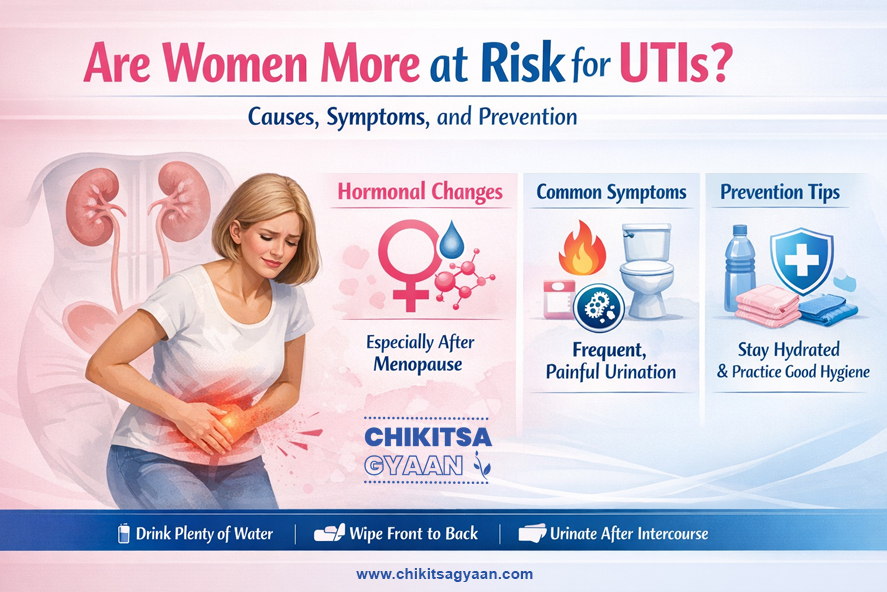
A Urinary Tract Infection (UTI) is a common condition that can affect both men and women. However, due to biological and hormonal differences, women are significantly more prone to UTIs than men. Understanding the reasons, recognizing early symptoms, and following proper preventive measures can help avoid complications.
Why Are Women More Susceptible to UTIs?
1. Shorter Urethra
This is the most important reason.
-
The female urethra is only 1.2–2 inches (about 4 cm) long
-
The male urethra is around 7–8 inches (20 cm)
Because the urethra is shorter in women, bacteria have a much shorter distance to travel to reach the bladder, making infections easier and faster to develop.
2. Close Proximity of Organs
In women, the urethra, vagina, and anus are located very close to each other.
Bacteria from the anal region (especially E. coli) can easily enter the urinary tract.
In men, these structures are farther apart, which reduces infection risk.
3. Hormonal Changes (Especially After Menopause)
After menopause:
-
Estrogen levels drop sharply
-
The lining of the urethra becomes thinner
-
Protective vaginal bacteria (good flora) decrease
This weakens natural defenses against infection.
Common Signs and Symptoms of UTIs
Symptoms depend on whether the infection affects the urethra, bladder, or kidneys.
Early and Common Symptoms
-
Burning or stinging sensation during urination
-
Frequent urge to urinate, even with little urine output
-
Feeling of bladder fullness or pressure
-
Strong or foul-smelling urine
-
Cloudy or dark-colored urine
Advanced or Severe Symptoms
-
Blood in urine (hematuria)
-
Pelvic pain or pressure (especially in women)
-
Lower back pain (infection spreading upward)
-
High fever with chills
-
Fatigue and weakness
-
Nausea or vomiting
-
Itching or discomfort in intimate areas
⚠️ Important:
If untreated, a UTI can spread to the kidneys and become serious. Always seek medical advice early.
How to Prevent UTIs
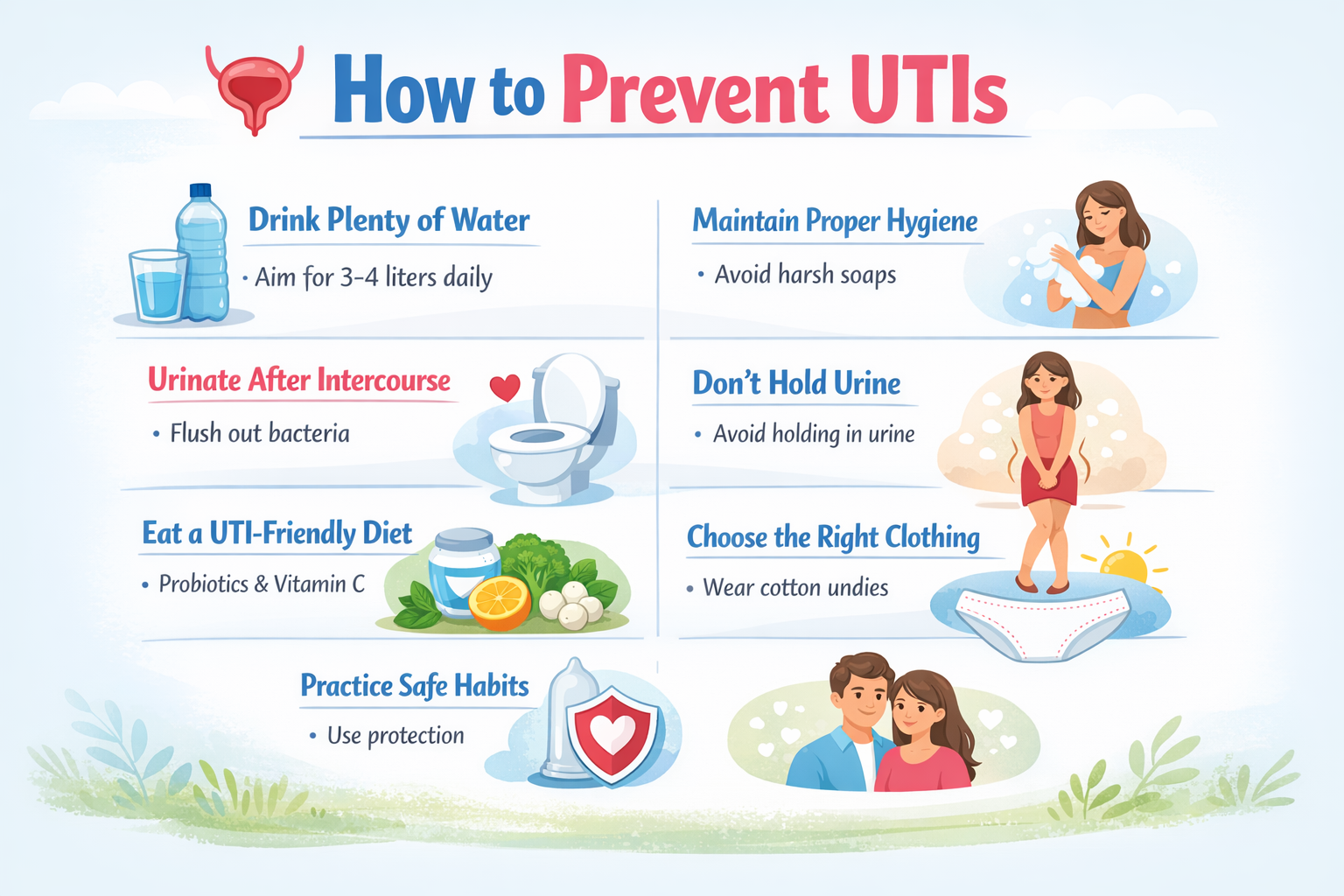
1. Drink Plenty of Water
-
Adequate hydration flushes bacteria out of the urinary tract
-
Aim for 3–4 liters daily (adjust based on climate and activity)
-
Frequent urination prevents bacterial buildup
2. Maintain Proper Intimate Hygiene
-
Wash intimate areas with clean water only
-
Avoid harsh soaps or chemical washes—they disrupt natural pH
-
Alum water may be used occasionally, if suitable
3. Urinate After Intercourse
-
This helps flush out bacteria that may enter during sexual activity
4. Don’t Hold Urine
-
Holding urine allows bacteria to multiply in the bladder
5. Eat a UTI-Friendly Diet
-
Include probiotics (yogurt, curd)
-
Eat fiber-rich green vegetables
-
Consume vitamin C–rich foods to inhibit bacterial growth
6. Choose the Right Clothing
-
Wear cotton innerwear
-
Prefer light-colored fabrics
-
Dry undergarments in sunlight
-
Avoid bleach and harsh detergents
-
Do not use chemicals or sprays in the vaginal area
7. Practice Safe Sexual Habits
-
Use protection
-
Maintain personal and partner hygiene
When to See a Doctor
If you experience:
-
UTIs 3–4 times a month
-
Persistent or worsening symptoms
This may indicate recurrent UTI, which requires evaluation by a specialist.
Final Note
UTIs are common but not something to ignore, especially in women. Early awareness, proper hygiene, healthy habits, and timely medical care can prevent complications and protect long-term urinary health.