
Eye Windshield Wipers: Nature’s Built-In Miracle for Eye Protection

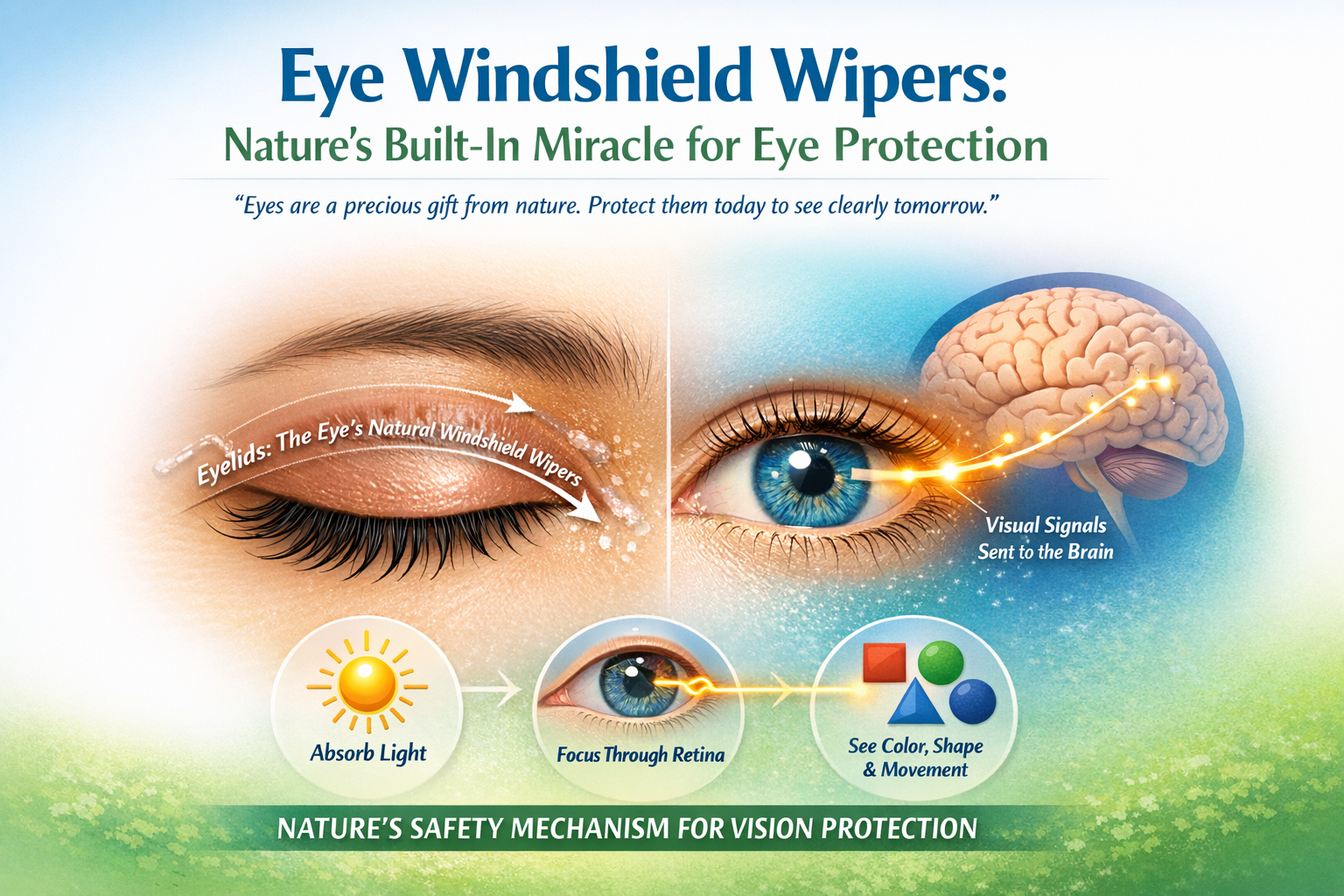
Our body is made up of five elements and five senses, each a wonder in itself—but vision is one of the most vital. The eyes act as the body’s natural balancing and sensing tool. They absorb light, convert it into electrical signals through the retina, and send these signals to the brain, allowing us to perceive color, shape, size, and movement.
To protect such a delicate and essential organ, nature has designed a brilliant safety mechanism—the eyelids, often called the eye’s natural windshield wipers.
What Are the Eye’s “Windshield Wipers”?
Just as a car’s wipers keep the windshield clean and clear, eyelids protect, clean, and nourish the eyes continuously—often without us even realizing it.
How Eyelids Protect the Eyes
1. Automatic Safety Shutter
The moment dust, insects, or any sudden object comes near the eye, the eyelids close instantly.
This blink reflex is the body’s rapid protection system that shields the pupil from injury.
2. Natural Wiper and Washer
Every blink spreads tears evenly across the eye’s surface.
This action:
-
Reduces friction
-
Washes away dust and microbes
-
Keeps the cornea smooth and clear
3. Moisture Lock System
Tiny oil glands along the eyelid margins release oils that prevent tears from evaporating too quickly.
This helps maintain eye hydration and prevents dry eye problems.
4. Eyelashes – The First Line of Defense
Eyelashes act like sensors and filters.
When dust or foreign particles touch the lashes, a signal is sent to the brain, triggering an immediate blink to block entry.
Essential Eye Care Tips for Modern Life
In today’s fast-paced, screen-dominated world, eye care is more important than ever. Follow these simple but powerful habits to protect your vision.
1. Follow the 20-20-20 Rule
Especially important for people who use screens for long hours:
-
Every 20 minutes, look at something 20 feet away for 20 seconds
This relaxes eye muscles and reduces digital eye strain.
2. Nourish Your Eyes with the Right Diet
Key nutrients for eye health include Vitamin A, antioxidants, and omega-3 fatty acids.
Include:
-
Carrots (Vitamin A)
-
Spinach (lutein for retinal health)
-
Papaya
-
Walnuts, flax seeds, fish oil (for eye lubrication)
3. Blink Consciously
Normally, we blink 15–20 times per minute.
While using screens, blinking drops to 5–10 times, leading to dryness and fatigue.
👉 Make a habit of intentional blinking to maintain natural eye protection.
4. Prioritize Quality Sleep
-
Sleep 7–8 hours daily
-
Proper sleep maintains eye hydration and reduces dryness, redness, and strain
5. Use Protective Eyewear
Depending on exposure, use:
-
Sunglasses (UV protection)
-
Blue-light blocking glasses (for screens)
-
Safety or gasket glasses (for dust and chemicals)
6. Avoid Screens in Darkness
Using phones or laptops in dark rooms strains the retina and disrupts eye coordination.
7. Maintain Eye Hygiene
-
Wash eyes gently with clean, cool water
-
Avoid touching eyes with dirty hands
8. Practice Simple Eye Yoga
A quick daily routine:
-
Rotate eyes clockwise and anti-clockwise 8 times
-
Rub palms together until warm and gently cup them over closed eyes (palming)
This provides instant relaxation and refreshment.
Final Thought
Your eyes work tirelessly every moment of your life.
They are not replaceable—and they deserve care, rest, and protection.
Eyes are a precious gift from nature. Protect them today to see clearly tomorrow.