Breath-Holding Spells in Children: Why Does My Child Turn Blue While Crying?

Does your child sometimes cry intensely, stop breathing for a few seconds, and turn blue or pale?
As frightening as this looks, this is usually not a disease. In medical science, it is called a Breath-Holding Spell (BHS).
Breath-holding spells are common, harmless, and temporary conditions, most often seen in children between 1 and 5 years of age. They are involuntary, meaning the child is not doing this on purpose.
What Exactly Happens During a Breath-Holding Spell?
Understanding the process can help parents stay calm.
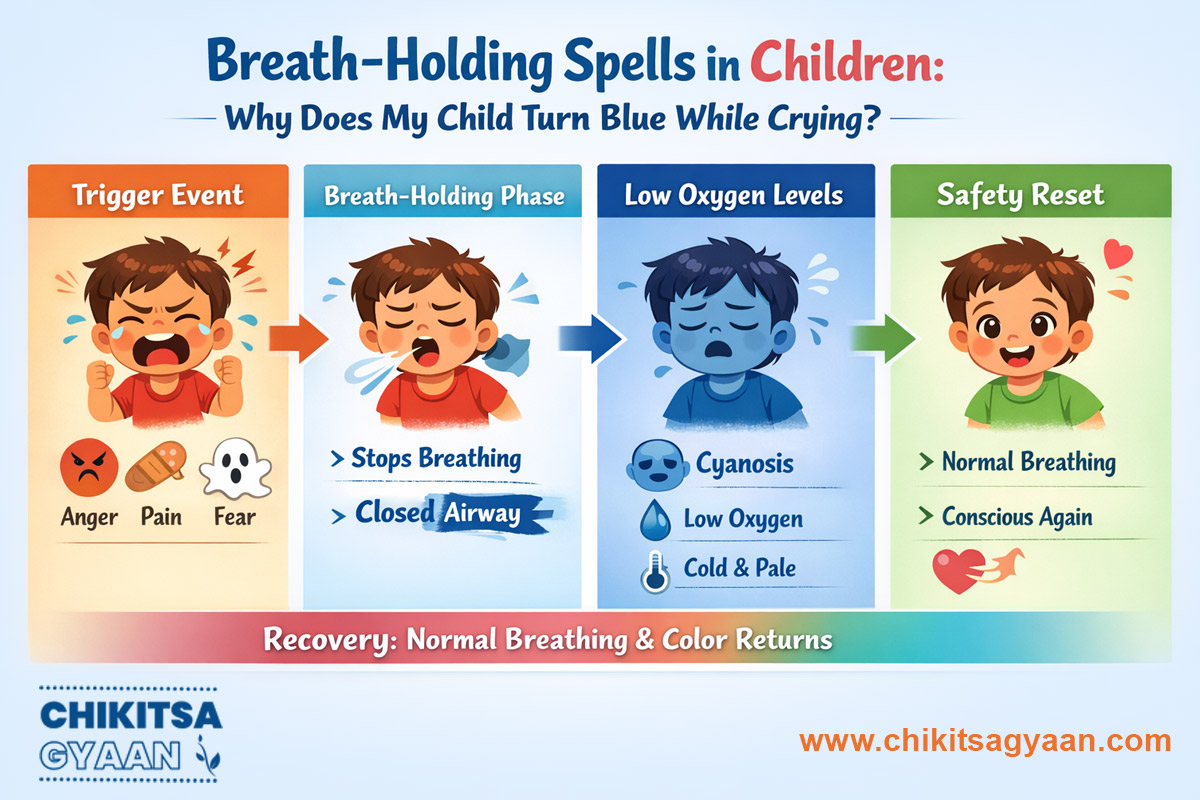
1. Trigger Event
A spell usually starts after a sudden emotional or physical trigger, such as:
-
Anger or frustration
-
Fear
-
Sudden pain or injury
-
Extreme excitement or sadness
The child begins crying forcefully.
2. Breath-Holding Phase
While crying, the child exhales a long breath (for example, “haaaaa…”) and then:
-
Temporarily stops breathing, or
-
The airway briefly closes
This happens automatically, not intentionally.
3. Drop in Oxygen Levels
-
Oxygen normally enters the blood through the lungs
-
When breathing pauses, oxygen levels fall
-
Hemoglobin (the oxygen-carrying protein in blood) becomes low in oxygen
As a result:
-
Lips, face, or nails may turn blue or purplish (called cyanosis)
-
The body may feel cold
4. Body’s Safety Reset Mechanism
The brain quickly senses low oxygen and activates the autonomic nervous system:
-
Muscles relax
-
The child may appear unconscious for a few seconds
-
A deep breath follows automatically
Within moments:
-
Normal breathing resumes
-
Skin color returns to pink
-
The child becomes alert again
Is Turning Blue Always a Breath-Holding Spell?
Not always. Blue discoloration (cyanosis) can have other causes and must be evaluated carefully.
Possible Causes of Cyanosis
-
Breathing or lung problems
-
Airway obstruction (something stuck in the throat)
-
Infections like pneumonia or bronchitis
-
-
Heart conditions
-
Congenital heart defects (e.g., hole in the heart)
-
Mixing of oxygenated and deoxygenated blood
-
-
Severe cold exposure
-
If hands and feet are blue but lips and tongue are pink, cold may be the cause
-
When Should You See a Doctor Immediately?
Seek urgent medical care if the child shows:
-
Severe difficulty breathing
-
Rib retractions while breathing
-
Wheezing sounds
-
Loss of consciousness for a prolonged time
-
Persistent or frequent blue episodes
-
Excessive or unusual crying
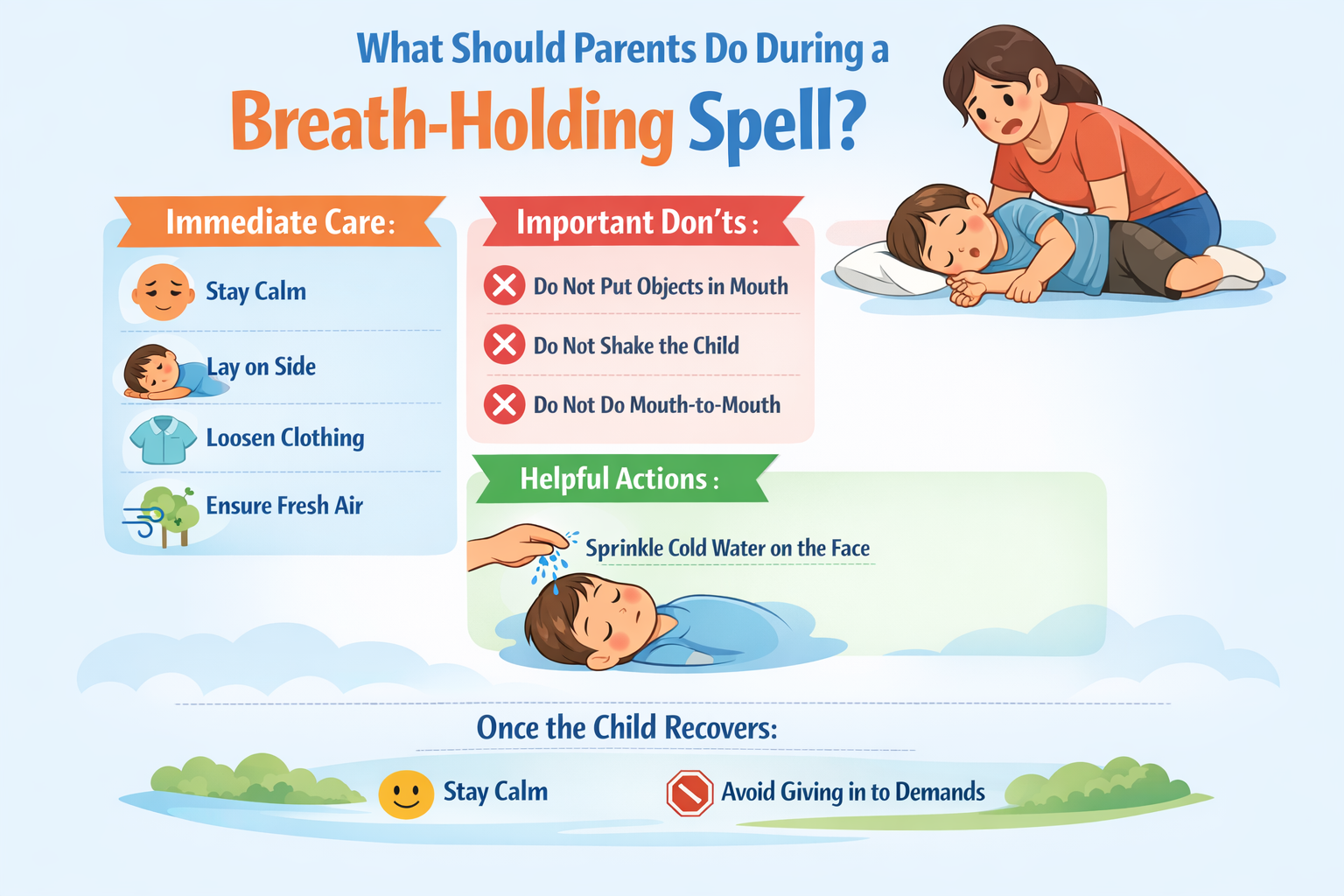
What Should Parents Do During a Breath-Holding Spell?
-
Immediate Care
-
Stay calm – panic can worsen the situation
-
Lay the child safely on their side
-
Loosen tight clothing
-
Ensure fresh air
Important Don’ts
-
❌ Do not put fingers, water, or objects into the child’s mouth
-
❌ Do not shake the child
-
❌ Do not attempt mouth-to-mouth resuscitation
Helpful Actions
-
Sprinkle a little cold water on the face
-
This can activate the body’s natural reflex and help recovery
Once the child recovers:
-
Stay calm
-
Do not immediately give in to demands that triggered the spell, or the behavior may repeat intentionally for attention
-
Prevention and Long-Term Management
1. Check for Iron Deficiency
Iron deficiency is commonly associated with breath-holding spells.
-
Blood tests: CBC and serum ferritin
-
Use iron syrup only if prescribed by a doctor
-
Include iron-rich foods:
-
Spinach
-
Beetroot
-
Eggs
-
2. Behavior Management
-
Distract the child during anger or frustration
-
Avoid fulfilling every demand instantly
-
Prevent extreme tiredness or hunger
3. Healthy Routine
-
Ensure regular meals
-
Adequate sleep
-
A calm, structured daily routine
Reassurance for Parents
Breath-holding spells:
-
Are not epilepsy
-
Do not damage the brain
-
Do not affect intelligence
-
Usually disappear on their own by 5–6 years of age
Your calm response is the most powerful treatment.