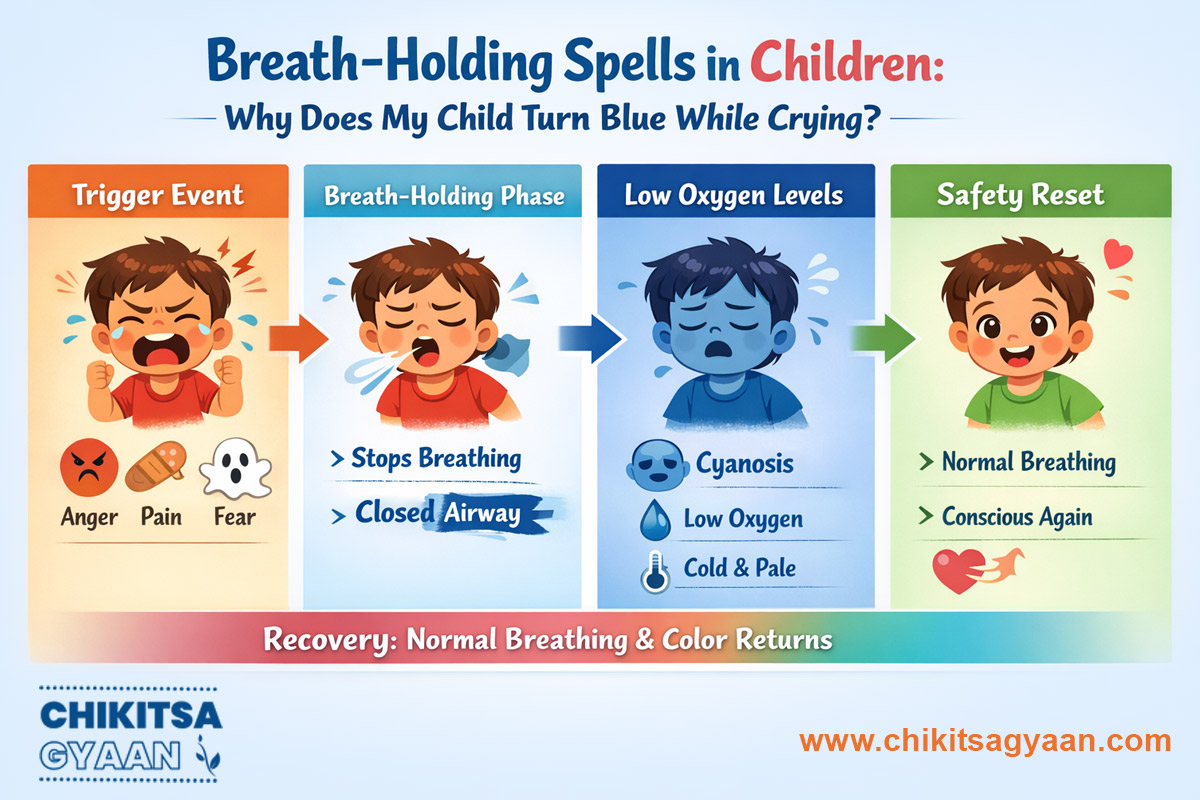
Does Your Child Have a Whistling Sound While Breathing? It Could be Bronchiolitis

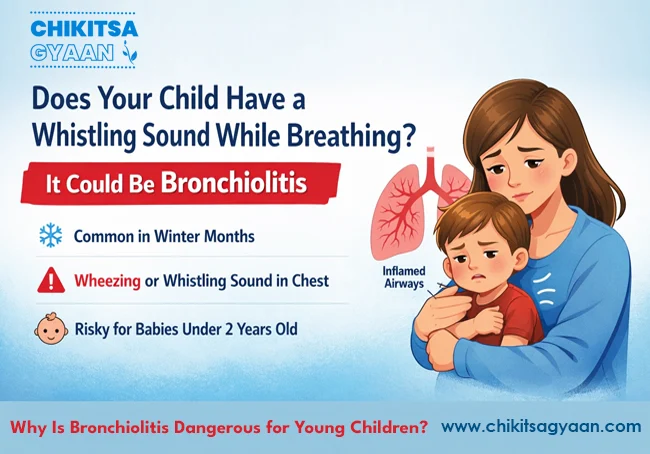
Colds and coughs are very common in children during the winter season. However, what looks like a simple cold can sometimes turn into a serious lung infection, especially in young children.
If your child makes a whistling or wheezing sound from the chest while breathing, do not ignore it. It could be a condition called bronchiolitis, which can be dangerous—particularly for babies under 2 years of age.
What Is Bronchiolitis?
Bronchiolitis is a viral lung infection, most commonly caused by the Respiratory Syncytial Virus (RSV).
This virus infects the small airways of the lungs (bronchioles), causing:
-
Inflammation
-
Swelling
-
Excess mucus production
As a result, the airways become narrow, making it very difficult for the child to breathe.
Why Is Bronchiolitis Dangerous for Young Children?
-
Babies have small and delicate airways
-
Their immune system is still developing
-
Even mild swelling can severely restrict airflow
That’s why bronchiolitis is more serious in infants and toddlers than in older children.
Symptoms of Bronchiolitis
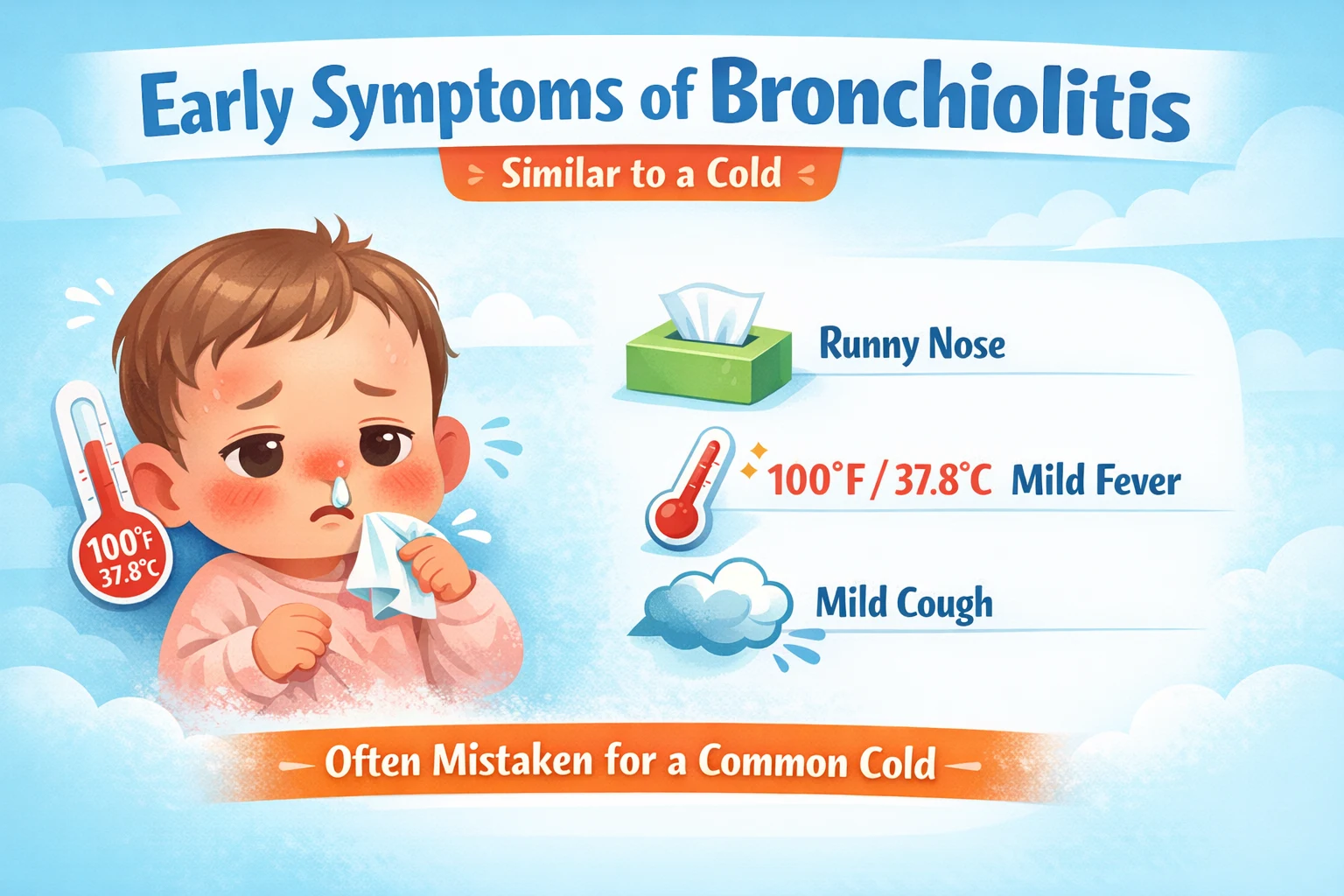
Early / Mild Symptoms (Similar to a Cold)
-
Runny nose
-
Mild fever (around 100°F / 37.8°C)
-
Mild cough
Parents often mistake this stage for a common cold.
Worsening Symptoms (After 2–3 Days)
-
Wheezing – a whistling sound from the chest
-
Rapid breathing
-
Chest retractions – the ribs or chest sink inward while breathing
Critical Warning Signs (Red Flags 🚨)
Seek immediate medical help if you notice:
-
Bluish color (cyanosis) on lips or nails
-
Child is too tired to drink milk or water
-
Pauses in breathing
-
Extreme lethargy or excessive sleepiness
These signs indicate low oxygen levels and require urgent care.
How Is Bronchiolitis Diagnosed?
1. Physical Examination
Doctors listen to the chest using a stethoscope:
-
Wheezing sounds
-
Crackles (bubbling sounds due to mucus)
-
Increased heart rate
2. Breathing Pattern Assessment
-
Nasal flaring
-
Chest or neck retractions
3. Breathing Rate
-
More than 60 breaths per minute is dangerous for infants
4. Pulse Oximetry
-
A sensor placed on the baby’s foot
-
Measures oxygen levels in the blood
-
Oxygen levels below 92–90% may require hospitalization
5. Nasal Swab Test
-
Detects RSV or other viruses
Additional Tests (if needed)
-
Chest X-ray
-
Blood tests
How Parents Can Monitor at Home (Count & Watch Method)
Parents play a key role in early detection:
-
Count breaths for one full minute
-
Watch if the baby gets tired or breathless while feeding
-
Place your hand on the chest and listen for unusual sounds
If anything feels unusual, consult a doctor immediately.
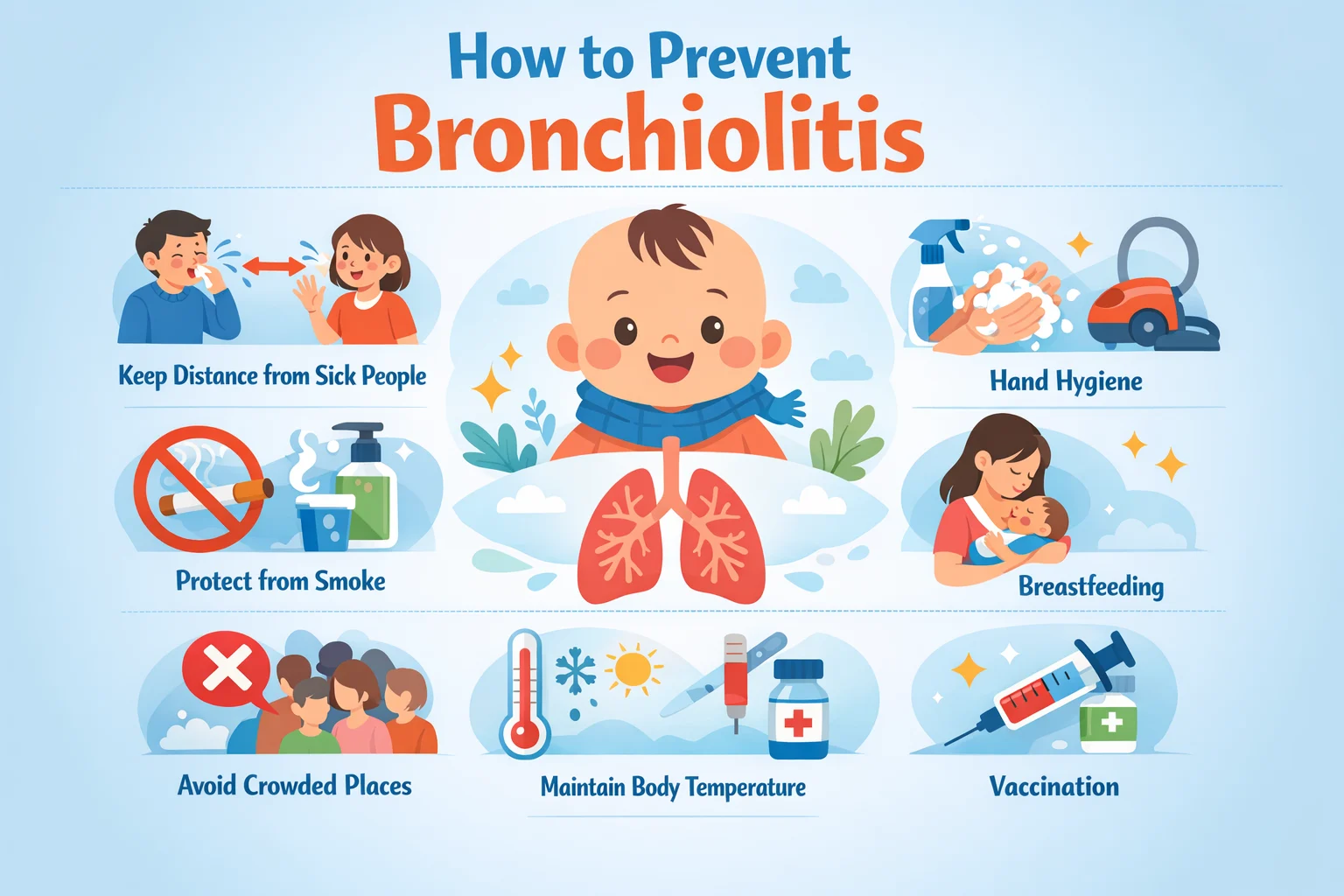
How to Prevent Bronchiolitis
Prevention is not just about medicine—it’s about creating a safe environment.
1. Keep Distance from Sick People
-
RSV spreads easily
-
Do not allow anyone with a cold or cough to kiss or hold the baby
2. Hand Hygiene
-
Wash hands before touching or feeding the baby
-
Ask visitors to wash hands
-
Keep people coming from outside away from the baby
3. Clean the Home
-
Clean floors regularly
-
Disinfect toys frequently
4. Protect from Smoke
-
Cigarette smoke increases RSV risk by up to 50%
-
Avoid kitchen smoke as well
-
Smoke irritates and swells lung airways
5. Breastfeeding
-
Breast milk contains antibodies that protect against infections
-
Exclusive breastfeeding for the first 6 months is highly recommended
6. Avoid Crowded Places
-
RSV spreads from person to person
-
Crowded places increase infection risk
7. Maintain Body Temperature
-
Dress babies in layers
-
Protect them from cold and hypothermia
8. Vaccination
-
Follow the recommended vaccination schedule
-
Vaccines strengthen overall immunity
Final Message for Parents
Your child is precious. Every symptom matters.
Early recognition and timely action can save lives.
If your child shows breathing difficulty, wheezing, or unusual tiredness—do not wait. Consult a doctor immediately.