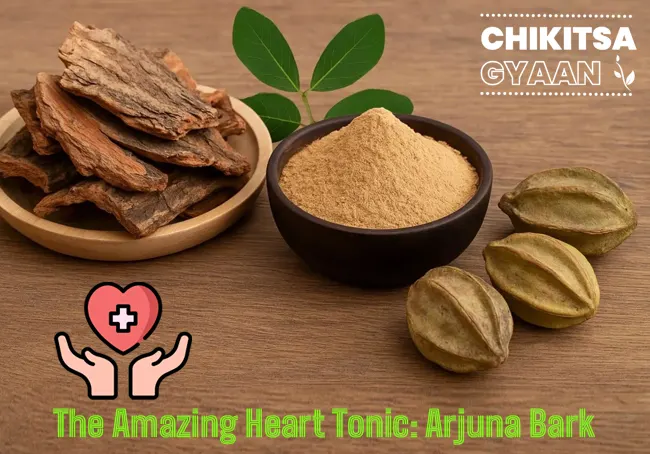
The Amazing Heart Tonic: Arjuna Bark

In today’s fast-paced and unhealthy lifestyle, we often ignore early warning signs from our heart—until a serious problem arises. Ayurveda offers a powerful natural solution in the form of Arjuna bark, a time-tested herb known as a natural heart tonic.
What Is Arjuna Bark?
-
Scientific Name: Terminalia arjuna
-
Common Name: Arjuna
-
Taste: Astringent
Arjuna is a large, shady tree commonly found near riverbanks, as it thrives in moist environments. Its most distinctive feature is its bark:
-
The outer bark is white or light brown
-
The inner bark is pinkish, which turns reddish-brown after drying
-
The bark naturally peels off like a snake shedding its skin and is soft and easily breakable
The fruit of the Arjuna tree is hard and resembles a star-shaped structure with five wing-like ridges.
Key Bioactive Compounds
-
Arjunic acid
-
Flavonoids
These compounds are responsible for Arjuna’s cardioprotective and antioxidant effects.
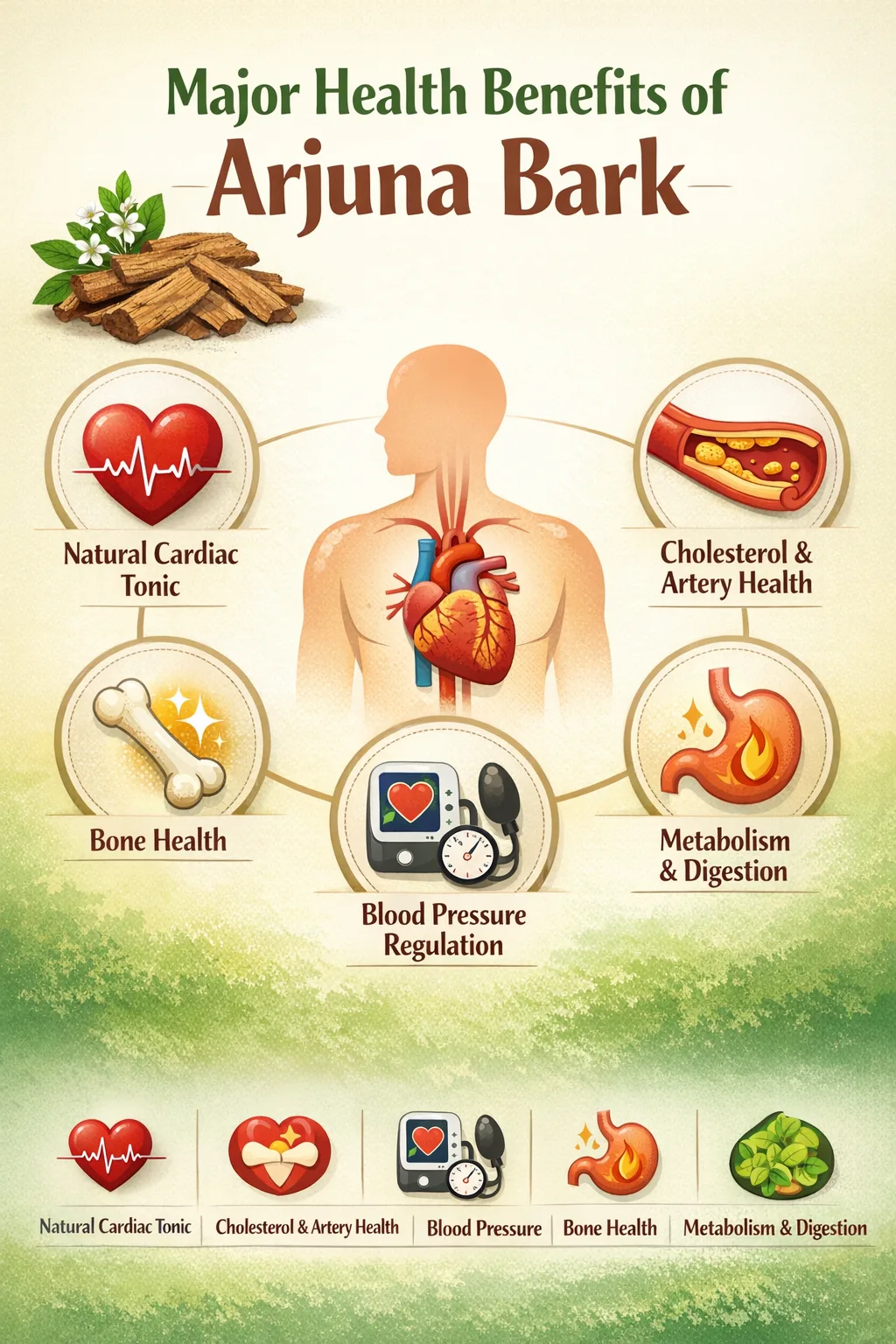
Major Health Benefits of Arjuna Bark
1. Natural Cardiac Tonic
-
Strengthens heart muscles
-
Improves the heart’s pumping capacity
-
Enhances blood circulation
-
Beneficial in angina and post–heart attack recovery
2. Cholesterol & Artery Health
-
Reduces bad cholesterol (LDL)
-
Increases good cholesterol (HDL)
-
Helps prevent fat accumulation in arteries, reducing blockages
3. Blood Pressure Regulation
-
Has hypotensive properties
-
Helps control high blood pressure and reduces stress on the heart
4. Bone Health
-
Rich in calcium
-
Supports bone strength
5. Metabolism & Digestion
-
Improves metabolism
-
Aids weight management
-
Helps relieve digestive discomfort
How to Use Arjuna Bark
-
Boil 3–4 grams of Arjuna bark powder in water or milk
-
Consume as a tea
-
Can be taken with honey
-
Best taken on an empty stomach
⚠️ Caution: If you are already on medication, consult a qualified Ayurvedic physician before use.
Arjuna bark is nature’s protective shield for the heart—energizing and strengthening the body’s most vital organ.
Are Men at Higher Risk of Heart Attacks Than Women?
Statistics show that men are more prone to heart attacks than women, especially at a younger age. There are clear biological, hormonal, and lifestyle-related reasons behind this difference.
Why Men Face Higher Risk
1. Hormonal Protection in Women
-
Estrogen acts as a protective shield in women
-
Increases HDL (good cholesterol)
-
Reduces LDL (bad cholesterol)
-
Keeps blood vessels flexible
-
After menopause, women’s risk becomes similar to men
2. Fat Distribution Pattern
-
Men (apple-shaped body): Visceral fat around abdomen and internal organs
-
Causes inflammation
-
Increases heart disease risk
-
-
Women (pear-shaped body): Fat stored around hips and thighs
-
Lower cardiovascular risk
-
3. Emotional Stress & Suppression
Societal conditioning often discourages men from expressing emotions.
-
Chronic stress increases cortisol
-
Leads to high blood pressure and irregular heart rate
-
Prolonged anxiety damages heart health
4. Lifestyle & Habits
-
Frequent consumption of outside food rich in trans fats, sugar, preservatives
-
Higher rates of smoking and alcohol consumption
-
These habits narrow arteries and reduce blood flow
5. Screen Addiction & Poor Sleep
-
Excessive mobile use, especially at night
-
Disrupts sleep cycle
-
Increases heart disease risk
6. Ignoring Early Warning Signs
Men often dismiss symptoms like:
-
Chest discomfort
-
Shortness of breath
-
Heaviness or fatigue
These may be early signs of a heart attack, not just gas or tiredness.
7. Genetic Factors
-
Certain genes on the Y chromosome may increase the risk of coronary artery disease (CAD)
8. Physical Inactivity
-
Work-from-home culture has increased sedentary behavior
-
Sitting for 8–10 hours daily reduces blood circulation
-
Lack of exercise strains the heart
9. Existing Health Conditions
-
Chronic diseases like kidney failure, diabetes, hypertension increase heart attack risk
Important Reminder
Ignoring symptoms can be fatal. If you experience anything unusual, consult a doctor immediately. Early action can save lives.