Rhesus (Rh) Incompatibility: When a Mother’s Blood Becomes a Threat to Her Unborn Child

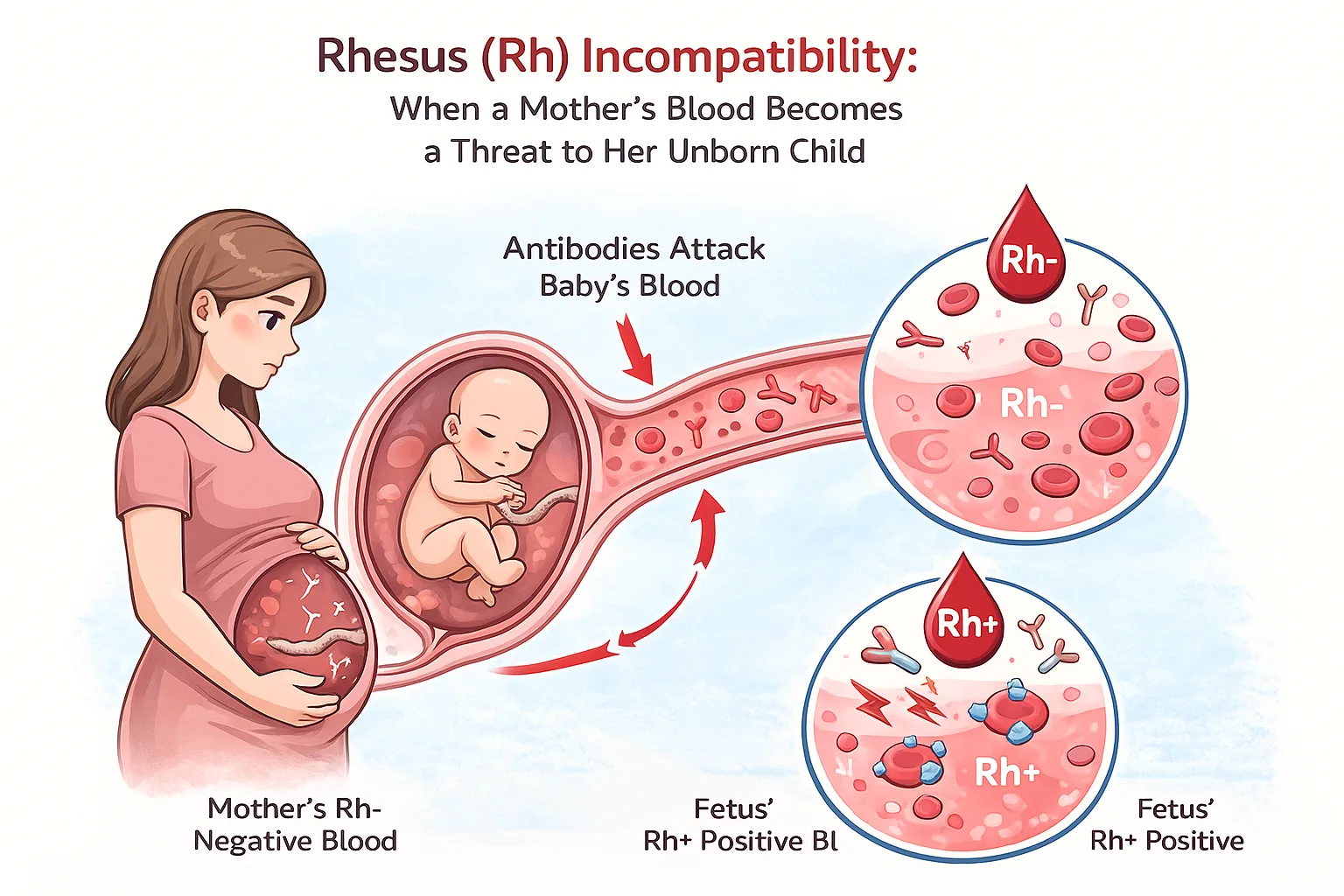
Pregnancy is usually a time of joy and hope, but in some cases, a mother’s own blood can pose a serious risk to her baby. This condition is known as Rhesus (Rh) incompatibility.
To understand this condition, it is essential to first understand the Rh factor.
What Is the Rhesus (Rh) Factor?
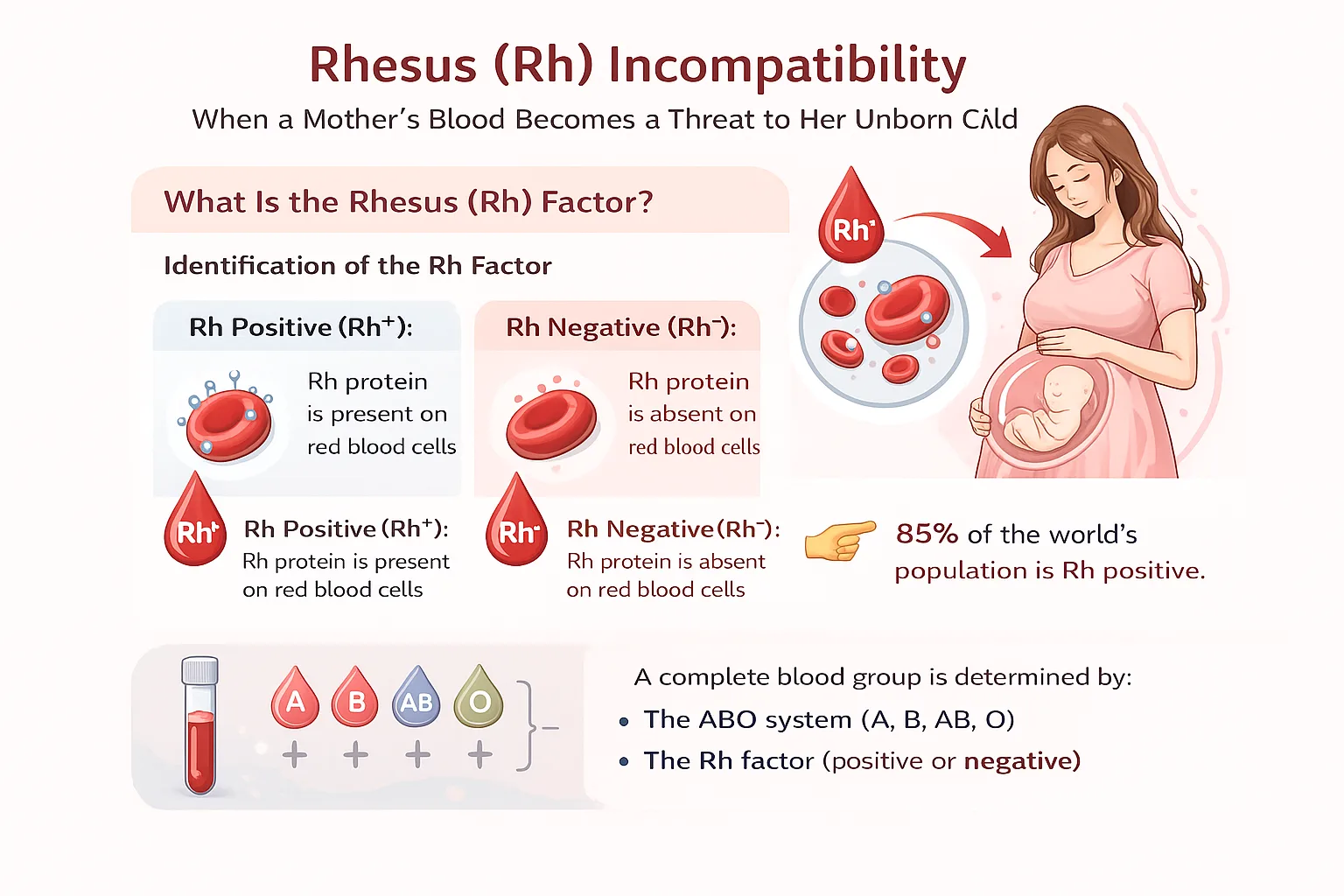
The Rhesus factor is a specific protein (antigen) found on the surface of red blood cells (RBCs).
It is a vital part of the blood group system that determines whether a person’s blood type is positive or negative.
Identification of the Rh Factor
-
Rh Positive (Rh⁺): Rh protein is present on red blood cells
-
Rh Negative (Rh⁻): Rh protein is absent on red blood cells
👉 Nearly 85% of the world’s population is Rh positive.
A complete blood group is determined by:
-
The ABO system (A, B, AB, O)
-
The Rh factor (positive or negative)
Why Is the Rh Factor Important in Pregnancy?
Problems arise when there is a blood type mismatch between the mother and the baby.
What Is Rh Incompatibility?
Rh incompatibility—also known as Rh disease or Hemolytic Disease of the Fetus and Newborn (HDFN)—occurs when:
-
The mother is Rh negative (Rh⁻)
-
The baby is Rh positive (Rh⁺)
In this situation, the mother’s immune system may identify the baby’s Rh-positive red blood cells as foreign and start producing antibodies against them.
How Rh Incompatibility Can Lead to Fetal Death
1. Formation of Rh Antibodies
If Rh-positive fetal blood cells enter an Rh-negative mother’s circulation—during:
-
A previous pregnancy
-
Miscarriage or abortion
-
Vaginal bleeding
-
Trauma or invasive procedures
…the mother’s immune system begins producing anti-Rh antibodies, treating the baby’s cells like invaders.
Antibodies Cross the Placenta
-
The first Rh-positive pregnancy is usually unaffected, as antibody formation takes time.
-
In subsequent pregnancies, pre-formed antibodies cross the placenta and enter the baby’s bloodstream.
Destruction of Red Blood Cells (Hemolysis)
The antibodies destroy the baby’s red blood cells, a process called hemolysis.
This leads to:
-
Severe anemia
-
Reduced oxygen supply to tissues
Organ Failure and Death
To compensate for anemia:
-
The baby’s liver and spleen enlarge while trying to produce more RBCs
-
The heart works harder, increasing the risk of failure
Hydrops Fetalis
Severe anemia causes fluid accumulation throughout the baby’s body, known as hydrops fetalis.
Stillbirth
If untreated, heart failure and hydrops fetalis can result in fetal death.
What Is the Coombs Test?
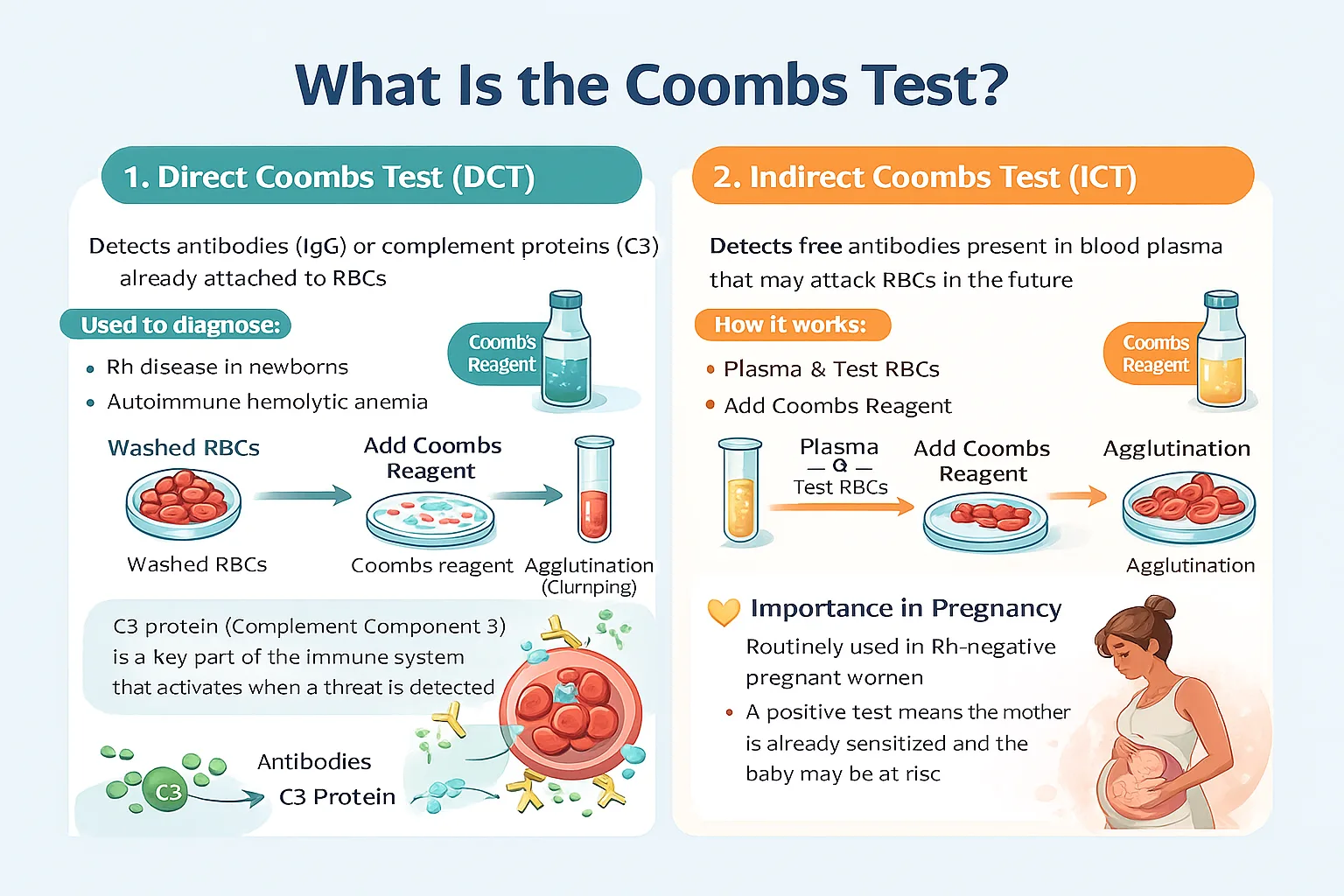
1. Direct Coombs Test (DCT)
-
Detects antibodies (IgG) or complement proteins (C3) already attached to RBCs
-
Used to diagnose:
-
Rh disease in newborns
-
Autoimmune hemolytic anemia
-
How it works:
-
Patient’s RBCs are washed and mixed with Coombs reagent (anti-human globulin)
-
If antibodies are present, RBCs clump together (agglutination)
C3 protein (Complement Component 3) is a key part of the immune system that activates when a threat is detected.
2. Indirect Coombs Test (ICT)
-
Detects free antibodies present in blood plasma that may attack RBCs in the future
How it works:
-
Patient’s plasma is mixed with test RBCs containing known antigens
-
Coombs reagent is added
-
Agglutination indicates the presence of Rh antibodies
Importance in Pregnancy
-
Routinely used in Rh-negative pregnant women
-
A positive test means the mother is already sensitized and the baby may be at risk
Kleihauer–Betke (KB) Test
The KB test measures how much fetal blood has entered the mother’s bloodstream (fetomaternal hemorrhage).
Why It’s Important
-
Helps calculate the correct dose of Anti-D immunoglobulin
-
Ensures effective prevention of Rh sensitization
Prevention and Treatment of Rh Incompatibility
Anti-D Immunoglobulin (RhoGAM)
Rh incompatibility is preventable, and the cornerstone of prevention is the Anti-D immunoglobulin injection, commonly known as RhoGAM.
How Anti-D Injection Works
1. Neutralizing Rh-Positive Cells
Anti-D antibodies bind to Rh-positive fetal RBCs present in the mother’s blood.
2. Masking from the Immune System
These antibodies act like a mask, preventing the mother’s immune system from recognizing the fetal cells as foreign.
3. Rapid Clearance
The coated RBCs are quickly removed from circulation, preventing long-term sensitization and protecting future pregnancies.
Final Message
Rh incompatibility is a serious but entirely preventable condition.
With early blood group testing, routine antenatal care, and timely Anti-D injections, both mother and baby can be kept safe.
Awareness and prevention save lives.