
What Is Stimming? Understanding Autism and ADHD Through Sensory Behaviors

Stimming is often misunderstood. Many believe it creates problems, but in reality:
Stimming is not a problem—it’s a problem-solving tool.
For neurodiverse individuals (especially those with Autism and ADHD), stimming helps regulate sensory input, manage emotions, and calm the nervous system. It is a natural, self-soothing process.
Stimming may involve repetitive movements, sounds, or behaviors that provide comfort and balance during sensory overwhelm or emotional stress.
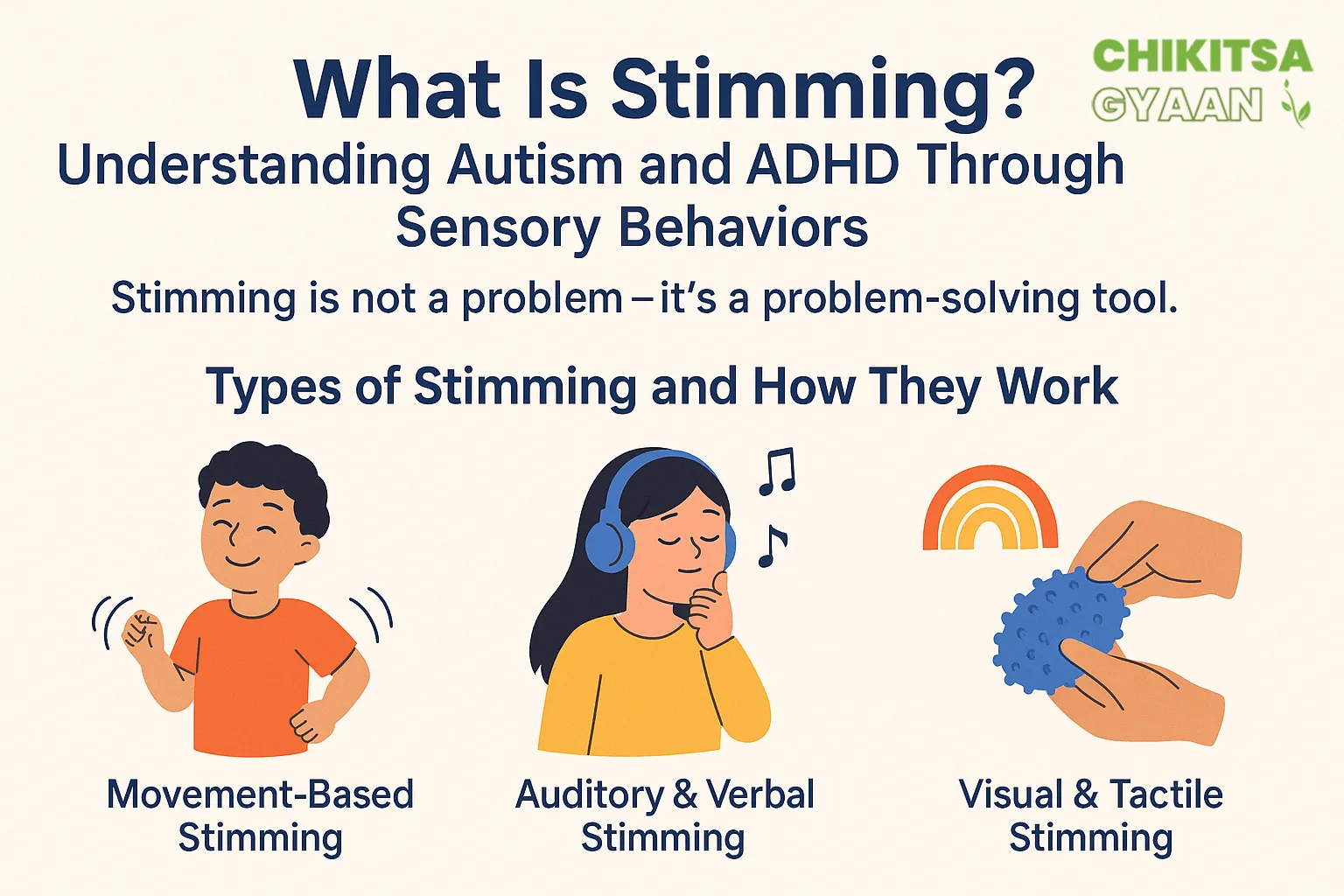
Types of Stimming and How They Work
1. Movement-Based Stimming
These are the most common forms:
-
Hand flapping – Moving hands up/down or side/side
-
Body rocking – Swaying forward/backward or side-to-side
-
Jumping – Continuous jumping in one place
-
Spinning in circles – For visual and movement stimulation
-
Pattern walking – Repetitive walking paths, tiptoe walking
-
Finger tapping or clicking
These movements help regulate sensory input and calm the mind.
2. Auditory & Verbal Stimming
-
Humming, mumbling, or making sounds
-
Echolalia – Repeating words, phrases, or conversations
-
Biting or chewing objects
-
Teeth grinding
These help manage auditory overload or emotional stress.
3. Visual & Tactile Stimming
-
Watching spinning objects
-
Staring at lights or flickering patterns
-
Looking from the corner of the eyes
-
Touching or rubbing surfaces repeatedly
These behaviors provide predictable sensory input that soothes the brain.
Why Do Autistic Children Stim? (The Science Behind It)
Stimming helps in four major ways :
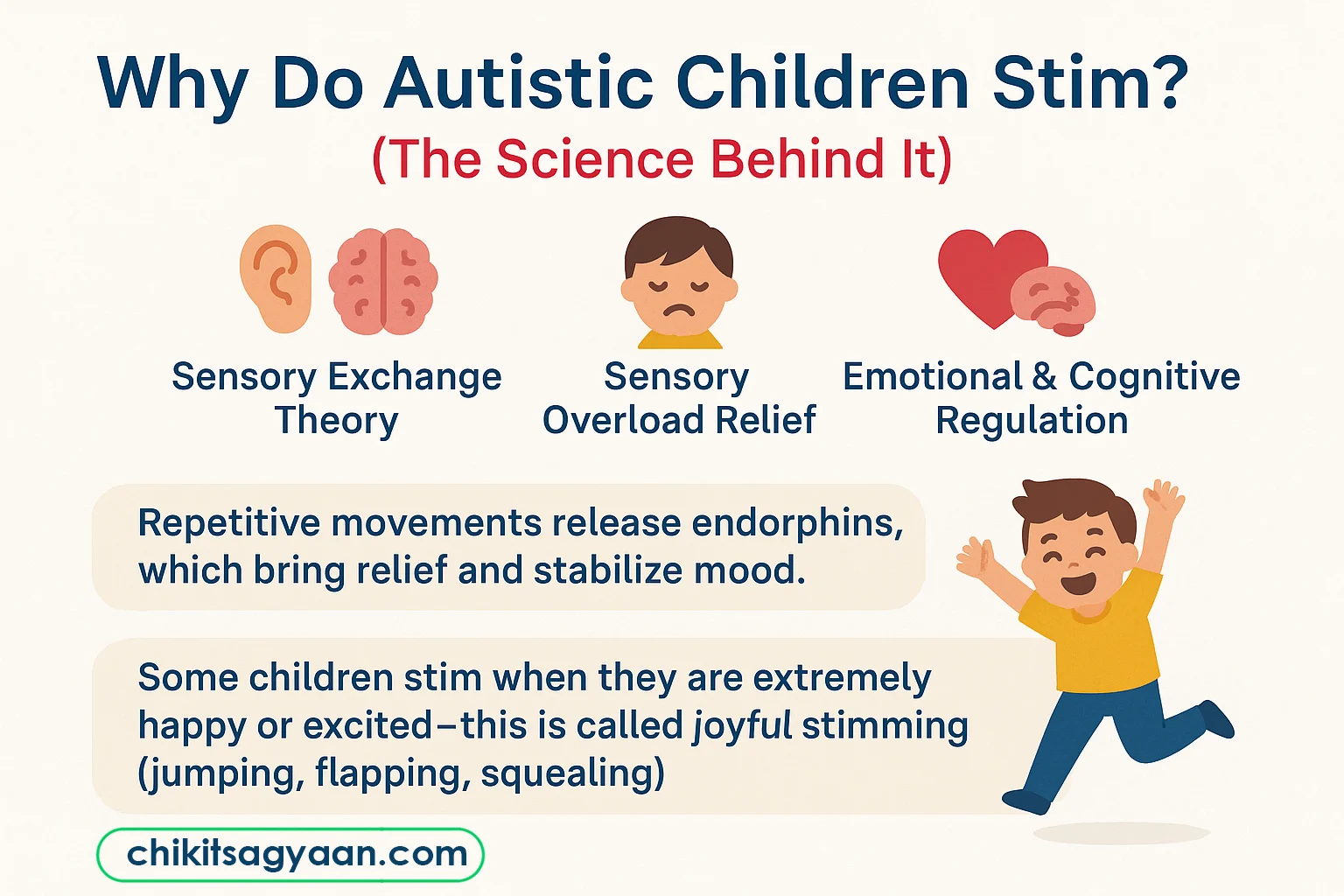
1. Sensory Exchange Theory
Autistic people process sensory information differently.
Their senses may react too strongly (overload) or too weakly (underload).
Stimming balances these extremes.
Example:
Too much noise → hand flapping helps block overwhelming input
Not enough sensory input → spinning or jumping helps stimulate the brain
2. Sensory Overload Relief
Imagine multiple loudspeakers blasting at full volume—this is what sensory overload feels like.
Overload triggers stimming to help:
-
Block excessive sensory input
-
Focus attention
-
Calm the nervous system
-
Make the environment more predictable
Common overload stims:
✔️ Hand flapping
✔️ Covering ears
✔️ Rocking
✔️ Pacing
3. Emotional & Cognitive Regulation
Stimming also helps control emotions such as:
-
Stress
-
Fear
-
Anxiety
-
Excitement
-
Overwhelm
Repetitive movements release endorphins, which bring relief and stabilize mood.
Some children stim when they are extremely happy or excited—this is called joyful stimming (jumping, flapping, squealing).
4. Pain & Attention Management
Stimming helps:
-
Distract from pain
-
Improve focus during tasks
-
Provide predictable comfort
It acts like a seat belt for the brain—keeping emotions, senses, and focus balanced.
❓ Does Stimming Occur Only in Autism?
No.
Stimming is also seen in:
-
ADHD
-
Anxiety disorders
-
Intellectual disabilities
-
Sensory processing disorder
-
Even neurotypical people (e.g., nail biting, pen clicking, hair twirling)
But in autism, stimming is more intense and more frequent because the sensory needs are stronger.
Should Stimming Be Stopped?
❌ No—and in many cases, stopping it can be harmful.
Stimming helps autistic individuals by:
-
Managing sensory overload
-
Reducing anxiety
-
Expressing emotions
-
Improving concentration
-
Communicating internal states (stress, excitement, pain)
Stopping stimming abruptly can increase:
-
Meltdowns
-
Anxiety
-
Emotional distress
⛔ When Should Stimming Be Interrupted?
Only when it becomes:
1. Self-harmful
-
Head-banging
-
Biting self
-
Hitting
-
Scratching skin
2. Harmful to others
-
Hitting
-
Pushing
-
Throwing objects
3. Socially disruptive
In school or public, when it creates safety issues or distress.
Even in these situations, stimming should not be stopped—
it should be redirected to safer alternatives.
Managing Stimming: Supportive, Not Restrictive
✔️ 1. Identify the Cause
Is the child overstimulated, bored, anxious, or in pain?
✔️ 2. Modify the Environment
-
Reduce loud noises
-
Use headphones
-
Provide quiet corners
-
Offer sensory breaks
✔️ 3. Replace Harmful Stims with Safe Alternatives
Examples:
-
Chewlery for biting
-
Stress balls for hitting
-
Fidget toys for hand movements
-
Weighted objects for calming
✔️ 4. Give Sensory Input Proactively
-
Deep pressure activities
-
Swinging
-
Trampolines
-
Sensory bins
-
Brushing protocol (under professional guidance)
Final Thought
Stimming is a natural, healthy, and essential part of autism.
It is not something to “fix,” but something to understand and support.
With empathy, sensory awareness, and safe alternatives, stimming can be managed in a way that protects the child’s well-being, enhances emotional regulation, and supports daily functioning.